7 Tips to Choose the Best Lithium Battery Charger

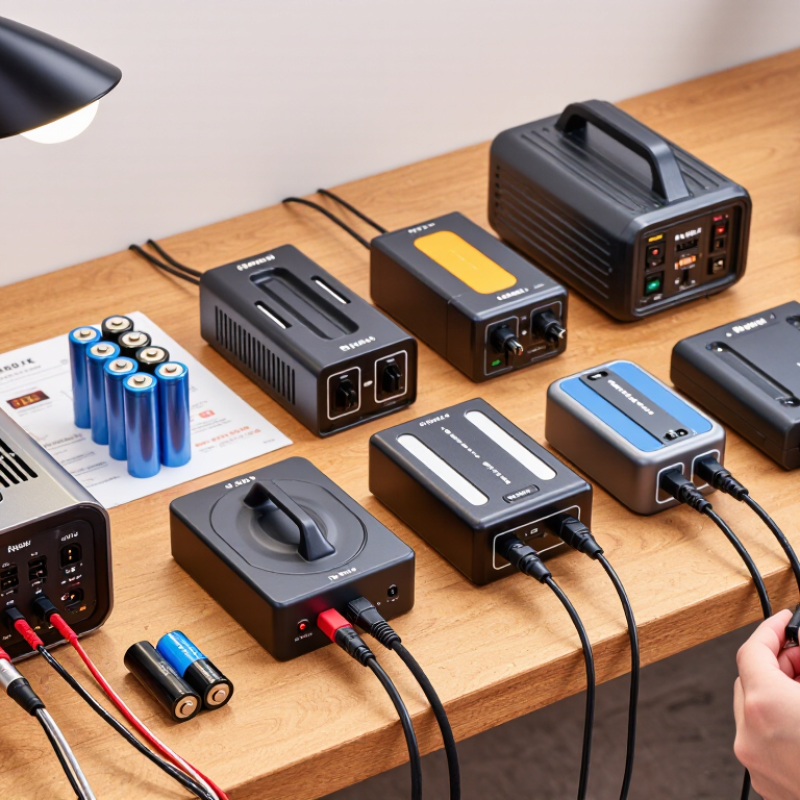
Choosing the right lithium battery charger is not simply a matter of matching a plug. Battery chemistry, voltage, capacity, connector type, and charging current all affect safety and performance. A charger designed for one lithium battery pack may damage another, even when both look similar. The label matters.

A reliable choice begins with the battery manufacturer’s specifications. Check the required charging voltage and recommended current before comparing products. For example, a 12.8-volt lithium iron phosphate battery usually needs a charger with a compatible charging profile. A standard charger for another chemistry may cause overheating, incomplete charging, or reduced battery life. Slow charging is often gentler, but it may not suit every application.

Small details reveal quality. Look for clear electrical ratings, temperature protection, reverse-polarity protection, and durable strain relief around the cable. A charger with poor ventilation can become uncomfortably hot on a workbench. That warning should not be ignored. Recognized safety testing and a transparent manufacturer also provide useful confidence, although labels alone cannot prove long-term reliability.

Real-world use can expose weaknesses that product pages hide. A charger might work well indoors but struggle in a cold garage. Another may have a convenient display but inaccurate readings. I have learned that convenience sometimes distracts from compatibility. Check the manual, inspect the connector, and avoid guessing from appearance. The following seven tips explain how to compare charging profiles, safety features, build quality, support, and total value before buying a lithium battery charger. Mistakes happen. Careful checking reduces them.
7 Tips to Choose the Best Lithium Battery Charger

Understanding Lithium Battery Types and Charging Requirements

7 Tips to Choose the Best Lithium Battery Charger

Lithium battery chargers are not universal accessories; their settings must match the cell chemistry and pack design. A standard lithium-ion pack often uses a 4.2-volt full-charge limit per cell, while LiFePO4 commonly uses about 3.65 volts. Lithium polymer packs can share lithium-ion principles, but their shape, wiring, and protection system still matter. Check the label.

A practical choice starts with seven checks: chemistry, cell count, voltage, current, connector, polarity, and temperature range.

Do not assume a higher-current charger is better. The battery may accept only a controlled rate, such as 0.5C, and excessive current can create heat. Use a charger with constant-current and constant-voltage control, plus automatic termination and short-circuit protection. A built-in battery management system helps, but it cannot repair a mismatched charger.

Connector fit can also mislead users. Two plugs may look identical while carrying different voltage arrangements.

Before charging, inspect swollen cells, crushed cases, loose leads, or unusual odor. Stop if anything feels wrong. Charge on a nonflammable surface, keep vents clear, and follow the specified temperature limits.

Many lithium batteries should not charge below freezing unless specifically designed for it. Measure charger output with suitable equipment when specifications seem unclear.

Assumptions are cheap, but damaged cells are not. Even experienced users can miss one detail, so a second check remains worthwhile.

Matching Charger Voltage, Current, and Battery Capacity

Choosing the best lithium battery charger starts with voltage compatibility. Match the charger’s output voltage to the battery’s required full-charge voltage, not its nominal rating. A four-cell lithium iron phosphate pack may be labeled 12.8 volts, yet require about 14.6 volts when fully charged. Lithium-ion chemistry uses a different voltage range. Check the battery label or technical sheet carefully. Check the chemistry.

Charging voltage that is too high can cause overheating, cell damage, or battery failure. A charger that is too low may stop before the battery reaches its usable capacity. The charger should also use a constant-current and constant-voltage profile designed for that chemistry. Never assume a similar connector means electrical compatibility. The plug can fit.

Current must suit both battery capacity and its stated charging limit. For example, a 20 Ah battery charged at 0.5C receives 10 amps, if the manufacturer allows that rate. A lower current usually reduces heat, but it does not correct the wrong charging profile. Slow is not always safer. I once focused too much on amperage and overlooked the battery’s voltage curve. That mistake changed how I check chargers. Confirm polarity, inspect cable heating, and keep the pack within its recommended temperature range. Stop charging if the battery swells, smells unusual, or becomes unexpectedly hot.

Checking Connector Compatibility and Charging Protocols

Choosing a lithium battery charger starts with the connector, not the advertised wattage. A plug may fit physically, yet its polarity, pinout, or locking design may be wrong. Check the battery label, wiring diagram, and charger manual together. Confirm nominal voltage, maximum charge voltage, current limit, and temperature-sensor pins. Lithium-ion and lithium iron phosphate packs can require different voltage ceilings.

A matching plug is only a mechanical clue. Nothing more.

Charging protocol matters just as much. Most lithium packs use constant-current and constant-voltage charging, but smart packs may require communication with the battery-management system. Some systems exchange data through signal pins or a vehicle network.

Without that handshake, a charger may refuse to start or stop at the wrong point. IEC 62133-2 covers safety requirements for portable secondary batteries, while IEC 60335-2-29 addresses household and similar battery chargers.

These standards support safer design, but they do not prove universal compatibility.

The scale of the market makes careful matching less optional. The International Energy Agency’s Global EV Outlook 2024 reported more than 750 GWh of electric-vehicle battery demand in 2023, about 40% above 2022. More packs mean more connector variations and charging assumptions.

Compare exact model specifications, not product photos. Verify polarity with a qualified meter and follow the battery’s stated limits.

I would question vague claims like “universal lithium charger.” Universal is often incomplete. A charger may work today but lack thermal monitoring or protocol support for a revised pack.

Evaluating Safety Features, Certifications, and Build Quality

7 Tips to Choose the Best Lithium Battery Charger

Evaluating Safety Features, Certifications, and Build Quality

Choosing a lithium battery charger begins with chemistry, voltage, and safety—not appearance. A charger for lithium iron phosphate may not suit a standard lithium-ion pack. Check the battery label, charging voltage, and required current. Never rely on a connector alone. It can fit and still be wrong. Look for overvoltage, overcurrent, short-circuit, reverse-polarity, and temperature protection. Thermal monitoring matters when the charger operates inside a warm workshop. Good safety design should reduce charging current or stop charging when heat rises unexpectedly.

Certifications deserve careful verification. Look for relevant electrical safety standards and a recognizable certification mark for your market. Then match the mark to the exact charger model. A printed logo is not proof. Ask for a declaration of conformity, test report, or laboratory record when available. Check the manufacturer’s address, rating label, and date codes. Vague paperwork is a warning. I still treat certification claims cautiously, because online listings can simplify complicated testing requirements. That doubt is useful.

Build quality appears in small details. The cable should bend without exposing gaps near the plug. Strain relief should feel firm, not soft or loose. The enclosure should resist light pressure and show no sharp seams. During a supervised test, notice unusual buzzing, hot plastic, or a strong electrical smell. Stop immediately if any appear. A quiet fan is helpful, but fan noise alone proves little. Inspect the connector after several cycles. Darkening, looseness, or melted insulation suggests poor contact. Cheap-looking construction is not always unsafe, yet it deserves closer evidence.

Comparing Charging Speed, Efficiency, Price, and User Support

7 Tips to Choose the Best Lithium Battery Charger

Charging speed should match the battery’s capacity and manufacturer limits. The U.S. Department of Energy’s Alternative Fuels Data Center classifies Level 2 charging equipment from about 3 to 19.2 kilowatts. Higher power is not automatically better. Excessive current can increase heat, shorten battery life, or trigger safety limits. Check voltage, amperage, connector type, and charging profiles before comparing speed.

Efficiency deserves equal attention. The International Energy Agency reports that charging losses can commonly range from 10% to 30%, depending on equipment and operating conditions. A charger with accurate voltage control wastes less electricity and produces less heat. Look for overvoltage, overcurrent, short-circuit, and temperature protection. Energy labels and independent test reports are more useful than dramatic speed claims. Still, published efficiency figures may use ideal laboratory conditions. Real garages are messier. Cable length, ventilation, and cold weather matter.

Price should include installation, replacement cables, electricity loss, and possible maintenance. A cheaper unit may cost more after repeated failures or slow charging. Check the warranty period, repair process, software update policy, and response time from user support. The European Commission’s product sustainability work increasingly emphasizes durability and repairability, not only purchase price. I would also read recent user complaints, especially about overheating and delayed assistance. A charger that is slightly slower, efficient, well-protected, and supported locally may deliver better value over several years.

7 Tips to Choose the Best Lithium Battery Charger

Compare charging speed, efficiency, price, and user support while confirming battery chemistry, voltage, and charging safety requirements.

Seven Practical Selection Tips

  1. Match the charger to the battery chemistry, such as lithium-ion or LiFePO4.
  2. Confirm the charger voltage matches the battery pack's full-charge voltage.
  3. Choose charging power according to the battery capacity and acceptable charging time.
  4. Check conversion efficiency to reduce energy loss and unnecessary heat.
  5. Compare total price, including connectors, adapters, and required accessories.
  6. Look for essential protections such as over-voltage, over-current, short-circuit, and over-temperature protection.
  7. Review warranty length, documentation quality, replacement procedures, and technical support availability.

How to read the chart: The figures are representative reference values for common charger categories rather than brand-specific product data. Output power and price use the left axis, while efficiency and warranty period use the right axis. Always verify the exact charging profile and connector requirements before purchase.