China has become a critical manufacturing base for lithium charger technology. The International Energy Agency reported nearly 14 million electric cars were sold worldwide in 2023. China represented more than half of those sales. That scale creates strong demand for reliable charging hardware.
The market includes onboard chargers, industrial battery chargers, and compact systems for electric motorcycles. Leading Chinese suppliers often compete through efficiency, thermal control, communication protocols, and customization. Companies such as Shenzhen Kelu, TC Charger, Delta Electronics, and other specialized OEMs serve different market segments. However, “top” should not mean the largest factory alone. Buyers should examine certification, field experience, warranty support, and battery-management compatibility.
Battery researcher Dr. Jeff Dahn has said, “The battery is the most important component in an electric vehicle.” His point also explains the charger’s importance. Incorrect voltage, unstable current, or poor heat management can shorten battery life. A quality lithium charger should deliver controlled charging under changing temperatures and loads.
Reports from the IEA and BloombergNEF show China’s continuing strength across batteries, electric vehicles, and power electronics. Yet public data rarely separates lithium charger revenue from wider charger or power-conversion businesses. That makes simple rankings imperfect. Some manufacturers publish detailed technical data. Others reveal very little.
This guide compares China’s leading lithium charger manufacturers through practical criteria. It considers product range, charging performance, safety design, customization, production capability, and international service. The best choice may differ for a scooter, warehouse vehicle, solar-storage system, or electric car. A famous name is not always the safest fit.
China’s lithium charger manufacturing industry serves electric mobility, energy storage, tools, and industrial equipment markets. Manufacturers commonly develop chargers for lithium-ion and lithium iron phosphate battery systems. Each design must match voltage, current, connector type, cooling method, and battery management communication.
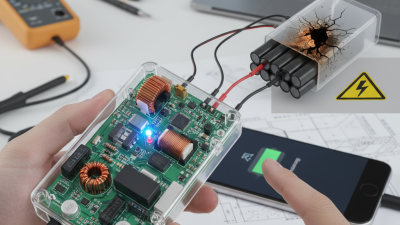
Production usually combines automated assembly with manual inspection. Technicians check solder joints, insulation gaps, enclosure sealing, and cable strain relief. Test rooms simulate unstable input voltage, high temperature, low temperature, and repeated charging cycles. These details matter in real use. A charger may operate beside a warehouse door, where dust, vibration, and sudden temperature changes expose weak construction.
Reliable manufacturers document material sources, calibration records, and product traceability. They also verify protection against overcurrent, overvoltage, overheating, and short circuits. Compliance testing should follow the destination market’s electrical and transport requirements. Buyers should request test reports, sample units, and clear warranty procedures before placing large orders.
Customization is another major feature of China’s manufacturing network. Engineers can adjust charging curves, display functions, communication protocols, and housing dimensions. However, customization can create confusion when technical files are incomplete. Some suppliers promise fast development but provide limited evidence from long-term field use. That gap deserves careful questioning. A polished sample is not enough. Real reliability appears after months of charging, handling, and maintenance.
Comparing Chinese lithium charger manufacturers requires more than checking price or production capacity. A reliable supplier should explain its experience with lithium-ion, lithium iron phosphate, or other battery chemistries. Voltage, current, charging stages, connector design, and thermal protection must match your application. A charger can look impressive and still fail during repeated charging.
Ask for test records, sample results, and clear traceability for key components. Professional manufacturers usually provide aging tests, short-circuit protection data, temperature testing, and quality-control procedures. Check whether the factory can support custom output ranges and regional safety requirements. Audit reports help, but they are not perfect. A direct factory visit or live production inspection may reveal more than a polished presentation.
Tips: Request two or three samples from the same production batch. Measure output voltage, charging time, surface temperature, and standby consumption. Ask how failed units are analyzed and reported. Warranty terms should define response times, replacement rules, and technical support. Also review engineering communication; slow or unclear answers may create costly delays later. Do not choose only by the lowest quotation. In practice, a slightly higher price can reflect stronger testing, better components, and safer long-term performance.
Who Are the Top Lithium Charger Manufacturers in China?
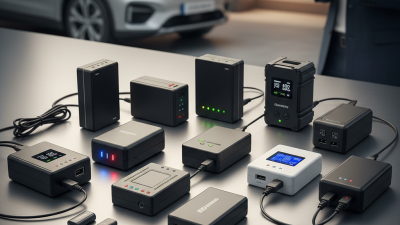
Leading Chinese lithium charger manufacturers differ mainly by product focus, not factory size. Some specialize in compact chargers for scooters, power tools, and portable medical equipment. Others produce wall-mounted units for electric vehicles or high-current systems for industrial batteries. This division matters because charging voltage, connector design, cooling, and protection settings change with every battery platform.
Portable charger specialists often prioritize low weight, silent operation, and simple indicators. Their better products use stable voltage control, short-circuit protection, and temperature monitoring. Industrial manufacturers focus on metal housings, forced-air cooling, replaceable cables, and long duty cycles. Smart charger producers add Bluetooth monitoring, charging records, and fault alerts. These features help technicians identify abnormal heat or cell imbalance before damage develops.
A practical supplier review should examine testing records, production traceability, and sample consistency. Ask how each model handles overvoltage, overload, reverse connection, and poor ventilation. Certification documents are useful, but they do not replace a physical inspection. The market is not perfectly transparent. Some catalogs appear impressive while offering little evidence of thermal testing. A sample may perform well, yet later batches can vary. That point deserves attention. Buyers should compare internal components, repair access, warranty terms, and response speed. Manufacturers with narrow product expertise may provide safer customization than factories offering every charger type. —
| Product Focus | Typical Lithium Battery Chemistry | Common Battery Voltage Classes | Typical Charger Output | Core Product Characteristics | Typical Applications | Common Safety and Compliance Requirements |
|---|---|---|---|---|---|---|
| Portable Lithium Battery Chargers | Li-ion and LiFePO4 | 3.6–3.7 V, 7.2–7.4 V, 11.1–14.8 V nominal battery packs | 10–150 W; constant-current/constant-voltage charging | Compact AC or USB-C input designs, lightweight enclosures, LED or digital charging indicators, and selectable charging profiles | Consumer electronics, handheld instruments, portable medical equipment, and personal mobility devices | Over-voltage, over-current, short-circuit, over-temperature, and reverse-polarity protection; applicable input and EMC requirements |
| E-Bike and E-Scooter Chargers | Primarily lithium-ion; some models support LiFePO4 | 24 V, 36 V, 48 V, 52 V, and 60 V nominal systems | 2–8 A; approximately 100–500 W | Dedicated battery-profile matching, fanless or low-noise cooling, charge-status indicators, and molded DC connectors | Electric bicycles, electric scooters, low-speed mobility vehicles, and light electric utility vehicles | Battery-management-system communication compatibility, short-circuit protection, insulation design, thermal protection, and regional electrical-safety certification |
| Electric Vehicle On-Board Chargers | High-voltage Li-ion and LiFePO4 battery systems | 200–800 V DC battery packs | 3.3–22 kW AC charging power | High-power AC-to-DC conversion, power-factor correction, CAN or equivalent vehicle communication, liquid or forced-air cooling, and rugged automotive packaging | Passenger vehicles, commercial vehicles, electric vans, and specialty electric platforms | Automotive functional-safety processes, high-voltage isolation, electromagnetic compatibility, thermal runaway risk controls, and applicable vehicle charging standards |
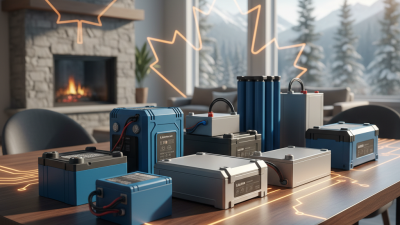
| Industrial and Energy-Storage Chargers | LiFePO4, lithium-ion, and lithium-titanate systems | 12–96 V low-voltage systems; higher-voltage systems available for storage equipment | 300 W–10 kW or higher, depending on system architecture | Programmable charging curves, remote monitoring, parallel operation, rugged metal housings, wide input-voltage ranges, and long continuous-duty cycles | Telecommunications backup, solar storage, industrial control systems, data infrastructure, and microgrids | Electrical isolation, surge protection, grounding, thermal management, battery-management-system integration, and industrial EMC requirements |
| Forklift and Material-Handling Chargers | LiFePO4 and high-capacity lithium-ion batteries | 24 V, 36 V, 48 V, 72 V, and 80 V battery systems | 1–30 kW, commonly 20–100 A output | High-current charging, automatic battery-recognition functions, opportunity-charging support, efficient cooling, and programmable charging schedules | Electric forklifts, warehouse vehicles, automated guided vehicles, and industrial cleaning machines | Over-current and over-temperature protection, connector interlock, ventilation or thermal monitoring, grounding, and industrial equipment safety requirements |
| Marine and Recreational Vehicle Chargers | Marine-grade LiFePO4 and lithium-ion batteries | 12 V, 24 V, 36 V, and 48 V systems | 10–3,000 W, depending on battery capacity and installation type | Multi-stage charging, corrosion-resistant construction, sealed or protected housings, multi-bank charging, and low standby consumption | Electric boats, yachts, recreational vehicles, caravans, and off-grid equipment | Moisture resistance, galvanic-isolation considerations, reverse-polarity protection, spark reduction, temperature sensing, and marine or vehicle installation standards |
| Solar and Off-Grid Lithium Charging Controllers | LiFePO4 and lithium-ion | 12 V, 24 V, 36 V, 48 V, and higher DC battery banks | 10–100 A; approximately 150 W–5 kW for many systems | MPPT or PWM solar control, configurable battery parameters, load management, display or mobile monitoring, and energy-harvesting optimization | Residential solar storage, remote power systems, telecommunications sites, agricultural equipment, and outdoor power units | Over-charge, deep-discharge, over-current, reverse-current, surge, and over-temperature protection; photovoltaic and EMC requirements |
| Custom OEM and ODM Lithium Chargers | Li-ion, LiFePO4, lithium-titanate, and application-specific chemistries | Single-cell packs through high-voltage multi-module battery systems | Customized from below 10 W to more than 20 kW | Application-specific firmware, custom connectors, private mechanical designs, battery-management-system communication, pilot production, and volume manufacturing support | Medical devices, robotics, drones, laboratory equipment, industrial automation, mobility products, and specialized vehicles | Product-specific risk assessment, insulation and dielectric testing, EMC validation, battery-pack compatibility, traceability, and target-market certification |
Who Are the Top Lithium Charger Manufacturers in China?
The strongest lithium charger manufacturers are not defined by factory size alone. They show consistent production standards, verified certifications, and disciplined quality control. ISO 9001 certification is a useful starting point, but it cannot replace an on-site audit. Reviewers should inspect process documents, operator training records, and calibration labels on testing equipment.
Safety testing must match the charger’s design and target market. Relevant references may include IEC 60335-2-29, IEC 62133-2, UN 38.3 transport testing, RoHS, and CE or UKCA requirements where applicable. A qualified manufacturer should provide current test reports, traceable samples, and clear declarations of conformity. Documents matter. So does evidence.
Quality control begins before assembly. Incoming components should be checked for voltage ratings, insulation condition, connector dimensions, and counterfeit risks. During production, automated testing can verify output voltage, current limits, polarity, and abnormal-load protection. Final inspection should include functional testing, visual checks, aging tests, and barcode-based traceability. Sampling plans must be written, not improvised.
However, certification does not guarantee flawless shipments. A clean audit may still miss supplier changes or rushed production. Manufacturers should record defects, investigate root causes, and prove corrective action. Some factories need stronger change-control discipline. Buyers can improve reliability by reviewing failure data, visiting production lines, and requesting independent laboratory verification before placing large orders.
The chart compares the publication year of widely recognized standards and regulatory references used when evaluating lithium charger manufacturers. These benchmarks cover product safety, battery safety, transport testing, and quality or environmental management. They are industry reference points rather than company-specific rankings.
Reference basis: ISO 9001:2015, ISO 14001:2015, IEC 62133-2:2017, IEC 62368-1:2018, IEC 60335-2-29:2016, and UN Manual of Tests and Criteria, Part III, subsection 38.3, Rev. 8:2023.
China’s charger market is broad, but the “top” manufacturer is not always the largest factory. The IEA’s Global EV Outlook 2025 reports that global electric car sales exceeded 17 million in 2024, with China selling more than 11 million. This growth increases demand for reliable charging equipment. Buyers should match the manufacturer’s experience with their battery chemistry, voltage range, charging current, and installation environment.
Check technical evidence, not only catalog photos. Ask for test reports covering IEC 60335-2-29, applicable EMC requirements, temperature protection, short-circuit control, and insulation performance. Confirm whether the factory can provide real aging-test records. A sample should operate beside your battery system for several weeks. Watch its heat, fan noise, connector fit, and charging stability. Small details matter.
Supply-chain capability also deserves attention. The IEA’s Global Supply Chains of EV Batteries report identifies China as a major center for battery materials and manufacturing capacity. However, local sourcing strength does not guarantee consistent charger quality. Request component traceability, production inspection records, software update procedures, and spare-part commitments. Review warranty exclusions carefully. No factory scores perfectly. I would document every unresolved gap before signing, because a confident sales presentation can hide weak after-sales support. Pricing should be compared with efficiency, testing depth, customization, and failure-response time—not unit cost alone.