China Top Lithium Battery Chargers Suppliers How to Choose?

China has become a major sourcing base for lithium battery chargers, serving electric vehicles, energy storage systems, tools, and portable equipment. Yet supplier choice is rarely simple. A polished catalog can hide weak testing, unclear specifications, or inconsistent production. Buyers need more than a low quotation. They need evidence.

This guide examines how to evaluate China’s lithium battery chargers suppliers using practical, technical, and commercial criteria. It considers charging voltage, current accuracy, battery chemistry, connector design, thermal protection, communication protocols, and certification documents. A charger for a 48-volt forklift battery cannot be judged like one for a small consumer device. The difference appears in heat, charging time, fault handling, and service life. Ask for test reports, sample units, factory details, and traceable quality records. An on-site audit or independent inspection can reveal more than a sales presentation.

Real purchasing experience also teaches caution. Samples may perform well, while mass production varies. Specifications can be correct, but after-sales support may remain slow. That weakness matters during a production delay. Reliable suppliers explain limitations instead of promising everything. They should discuss warranty terms, minimum order quantities, customization boundaries, spare parts, and response times. No supplier is perfect. Your evaluation method should allow for uncertainty and rechecking. By comparing technical proof, manufacturing capability, communication quality, and total cost, buyers can make a safer and more informed decision.
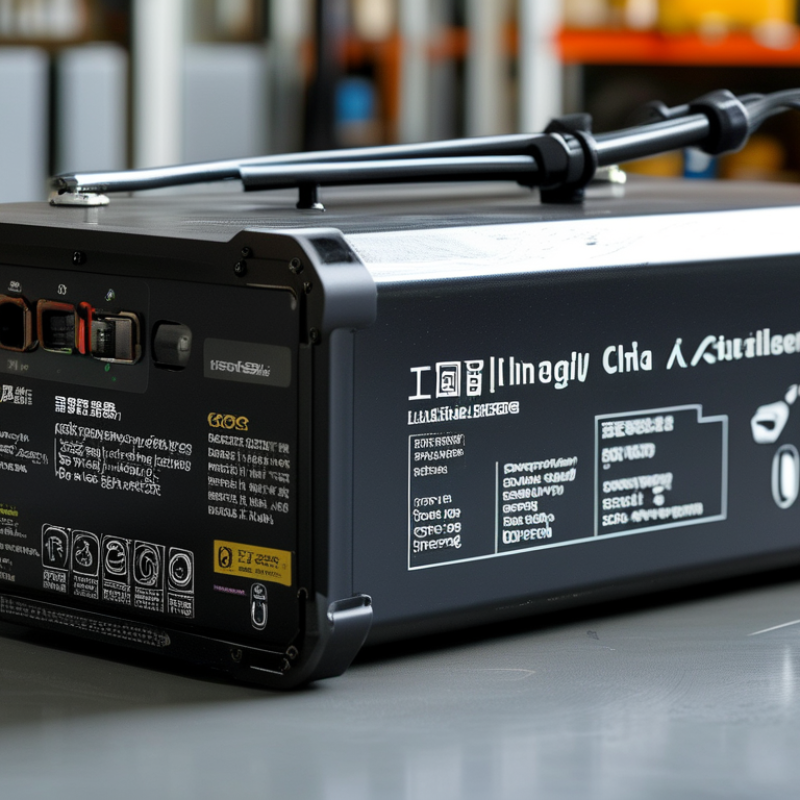
China Top Lithium Battery Chargers Suppliers How to Choose?

Define Charger Fit: Li-ion Chemistry, CC/CV Profiles, and 0.5C–1C Rates

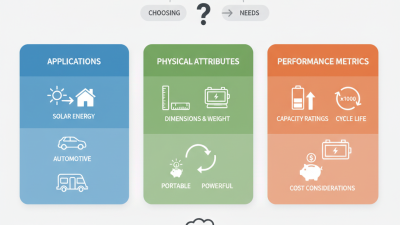
Choosing a lithium battery charger from China starts with chemistry, not price. Li-ion cells may use NMC, LFP, or other cathode designs. Their charge voltage limits differ. A charger for a 12-cell pack can damage a 13-cell pack.

The charging profile normally uses constant current, then constant voltage. During CC, current stays stable while voltage rises. During CV, voltage remains fixed and current gradually falls. A 0.5C rate charges a 20Ah battery at about 10A. A 1C rate uses about 20A. These figures are practical ranges, not universal rules. The IEA’s Global EV Outlook 2024 reported that global electric-car battery demand exceeded 750 GWh in 2023. This scale increases the need for accurate, chemistry-specific charging control.

Tips: Ask suppliers to state chemistry, cell count, maximum voltage, current accuracy, CV termination current, temperature limits, and BMS communication. Check test reports against IEC 62133-2 or relevant regional standards. Confirm whether 0.5C or 1C suits the battery maker’s warranty conditions. Faster charging sounds attractive. Heat may disagree. In field testing, connectors, cable losses, and poor airflow can reduce real performance. I have seen specifications look perfect until the charger meets a cold battery. That detail deserves another review.
Verify Safety: IEC 60335-2-29, BMS Protections, and UN 38.3 Compliance

As electric mobility expands, charger selection must begin with safety evidence, not catalog price. The IEA’s Global EV Outlook 2024 reports that electric car sales exceeded 14 million in 2023, increasing demand for dependable charging equipment. For household and similar applications, request a current IEC 60335-2-29 test report. Check the exact model, voltage range, insulation, leakage current, abnormal-operation results, and fire-enclosure performance. Small details matter. A certificate alone can mislead. Confirm its revision, laboratory scope, and production site before approval.

The battery pack also needs a documented BMS with overcharge, over-discharge, overcurrent, short-circuit, thermal, and cell-balancing protections. Ask for protection thresholds, recovery logic, firmware controls, and test records.

UN 38.3 is often misunderstood. It applies mainly to lithium battery transport testing, not charger safety certification. Request the applicable battery test summary and verify that the tested pack matches the supplied product.

BloombergNEF’s 2024 Battery Price Survey reported an average lithium-ion pack price of 115 dollars per kilowatt-hour, down 20% year-on-year. Cost pressure is real. Cutting validation is still a poor trade.

One practical weakness remains: suppliers may submit polished documents while leaving production changes undocumented. Require change-notification rules, sample retesting, and traceable serial records. That extra paperwork may feel excessive. It is not.

Compare Supplier Capability: 3C Charging, 90%+ Efficiency, and OEM Support

China Top Lithium Battery Chargers Suppliers: How to Choose

When comparing lithium battery charger suppliers in China, examine 3C charging capability carefully. Three times the battery’s rated capacity is demanding. It requires suitable cells, controlled current, thermal sensors, and stable firmware. Ask for test data at different temperatures, not only a showroom sample. A polished sample can still mislead.

Efficiency above 90% sounds convincing, but the test conditions matter. Confirm input voltage, output load, charging stage, and measurement equipment. Some suppliers quote peak efficiency under ideal conditions. Real products may perform differently in factories, vehicles, or outdoor equipment. I have found that heat measurements often reveal more than a product brochure. Check surface temperature after repeated charging cycles.

OEM support should cover more than printed logos. Strong suppliers can adjust connectors, enclosures, cable lengths, charging curves, and protection settings. They should provide drawings, firmware records, sample revisions, and compliance documents. Ask how they control component changes during mass production. Traceable batches matter. So does a clear warranty process.

Do not rely on one successful prototype. Request pilot samples and inspect performance independently. Supplier engineers should explain failure limits without vague promises. Their answers may not be perfect, which is useful. Honest uncertainty can expose areas needing more testing. A capable partner supports technical discussion, documents changes, and accepts practical verification before volume orders.

China Lithium Battery Charger Supplier Capability Benchmark

Capability scores are based on a transparent procurement model covering CCC/3C compliance, 90%+ efficiency, and OEM support. The tiers are non-company-specific reference profiles.

A qualified supplier should meet mandatory CCC/3C compliance, achieve at least 90% conversion efficiency under rated operating conditions, and provide documented OEM services such as electrical customization, enclosure design, firmware options, sampling, and production quality control.

Audit Quality Systems: ISO 9001, CE, RoHS, EMC, and 1,000-Cycle Testing

When comparing China-based lithium battery charger suppliers, audit the quality system before admiring product photos.
I ask for a current ISO 9001 certificate, its issuing body, scope, and covered factory address. The document should match the actual production site. During a factory visit, I compare incoming inspection records with warehouse labels and sampling rules. Small mismatches matter. They often reveal rushed control.

CE, RoHS, and EMC evidence needs careful checking.
CE is not simply a quality badge; it relates to applicable European requirements and the supplier’s declaration of conformity. Request test reports identifying the exact charger model, revision, input range, and laboratory details. RoHS records should show controlled material data, not only a copied statement. EMC testing should cover emissions and immunity under realistic operating conditions. Ask how failures are corrected and documented. A polished report can still be outdated.

For lithium battery applications, 1,000-cycle testing can expose charger behavior that short bench tests miss.
Confirm the battery type, charge profile, temperature range, cutoff accuracy, and test load. Ask for raw cycle logs, not only a final chart. Check whether capacity loss, connector heating, and charging time were recorded. I prefer witnessing a sample test or reviewing time-stamped data. Yet one test unit is not enough. Production variation remains a concern. Require a sampling plan, calibration records, and change-notification rules. My audit notes are sometimes incomplete, and that is a warning to improve the process, not hide it. If a supplier cannot explain a missing record, I pause the approval.

Evaluate Commercial Terms: MOQ, 15–30-Day Lead Times, Warranty, and Service

China Top Lithium Battery Chargers Suppliers: How to Choose?

Commercial terms often reveal a supplier’s real operating strength. Check the MOQ before requesting a quotation. A low MOQ may support testing, but it can increase unit cost. Ask whether the 15–30-day lead time includes component sourcing, assembly, testing, and export preparation. Request a written production schedule. For a trial order, confirm charger voltage, current, connector type, packaging, and inspection standards. Small details can delay a shipment.

Warranty terms deserve careful reading. Confirm the warranty period, covered failures, replacement process, and response time. A reliable supplier should explain who pays return freight and how defective units are verified. Service quality matters after delivery. Ask for technical documents, troubleshooting guidance, spare-part availability, and one accountable contact. I have seen buyers focus too heavily on price. That decision sometimes creates expensive delays later. Still, a longer warranty does not automatically prove better quality.

Tips: Compare at least three written quotations. Ask each supplier to price the same specifications. Separate sample costs from mass-order costs. Confirm payment milestones and change fees. Keep every promise in the purchase agreement. One practical warning: suppliers may describe lead times differently. Clarify whether the clock starts after payment, sample approval, or final confirmation. That point is easy to miss.

China Top Lithium Battery Chargers Suppliers How to Choose? - Evaluate Commercial Terms: MOQ, 15–30-Day Lead Times, Warranty, and Service

Anonymous comparison of common commercial supplier profiles for lithium battery chargers. The figures represent practical market benchmark ranges for standard products and should be confirmed in the supplier’s quotation, purchase contract, and quality agreement.

Supplier Profile Typical Charger Range Typical MOQ Standard Lead Time Custom/OEM Lead Time Warranty Benchmark After-Sales Service Commercial Evaluation
Established industrial charger manufacturer 24–96 V; approximately 1–10 kW; air-cooled and floor-standing models 10–20 units for standard models 15–25 days 30–45 days after design approval 12–24 months from shipment or commissioning, subject to contract terms Remote troubleshooting, replacement parts, technical manuals, and paid on-site support where available Strong choice for fleet, warehouse, and industrial projects requiring repeat supply and documented quality control
Mid-sized OEM/ODM charger supplier 12–84 V; approximately 0.5–6 kW; portable and wall-mounted products 50–100 units for standard configurations 18–30 days 35–60 days for enclosure, software, or connector changes 12 months is common; extended coverage may be negotiated for volume orders Pre-shipment testing, firmware support, video diagnosis, and spare-parts packages for approved projects Suitable when private labeling, connector customization, or application-specific settings are important
High-volume export supplier 12–72 V; approximately 0.3–3 kW; chargers for light electric vehicles and mobility equipment 100–300 units 20–30 days 45–70 days for tooling, certification, or packaging changes 12 months, commonly limited to manufacturing defects under defined operating conditions Email-based support, standard troubleshooting guides, batch replacement policy, and consolidated spare parts Competitive for price-sensitive repeat orders, but buyers should verify inspection procedures and response times
Small-batch engineering supplier 24–120 V; approximately 1–15 kW; configurable industrial and marine applications 1–5 units for evaluation or pilot projects 25–40 days 40–75 days depending on testing and low-volume engineering work 12–18 months, typically linked to approved installation and maintenance conditions Direct engineer access, application consultation, prototype modification, and commissioning support Best for pilot programs or technically complex applications; unit pricing and production capacity require careful review
Trading and sourcing company Common off-the-shelf chargers from multiple factories; specifications vary by project 20–100 units, depending on the selected factory 20–35 days Usually 45–75 days when factory-level customization is required Usually 12 months; warranty responsibility should be clearly assigned in the contract Supplier coordination, inspection arrangement, logistics support, and claim management Convenient for multi-product procurement, but buyers should identify the actual manufacturer and verify technical accountability
Project-focused system integrator 24–800 V; approximately 3–30 kW; charging cabinets and application-specific systems 1–10 systems for project orders 25–45 days 45–90 days for system integration, communication protocols, and site testing 12–24 months, often with separate terms for hardware, software, and on-site service Site survey, installation guidance, system commissioning, monitoring integration, and service-level options Appropriate for commercial or industrial deployments where integration and local support matter more than lowest unit price

Buyer checklist: Confirm whether MOQ applies per model, voltage, connector, or total order; request a written 15–30-day production commitment; define the warranty start date and exclusions; specify response and replacement times; and require pre-shipment inspection, test reports, spare-parts terms, and packaging standards in the purchase agreement.