7 Tips for Choosing Lithium Battery Chargers?
Choosing among lithium battery chargers is not a minor purchasing decision. The charger controls voltage, current, heat, and charging time. A poor match can reduce battery life, trigger protection circuits, or create unnecessary safety risks.
The International Energy Agency reported that global demand for electric vehicle batteries reached about 750 GWh in 2023, rising roughly 40% from the previous year. This growth reflects a wider dependence on rechargeable lithium batteries in vehicles, tools, backup systems, and portable equipment. As battery use expands, charger selection requires more than checking a connector. Voltage chemistry, battery capacity, charging protocol, temperature limits, and battery-management-system compatibility all matter.
Isidor Buchmann, founder of Cadex Electronics and Battery University, wrote, “A battery is like a human being: it needs to be treated with care.” That simple comparison remains useful. A charger that feels convenient may still be unsuitable. I have seen product pages emphasize fast charging while hiding thermal limits in small technical tables. That is a warning sign, not a detail.
This guide presents seven practical tips for choosing lithium battery chargers. It examines output voltage, charging current, connector design, charging stages, safety certifications, operating temperature, and manufacturer support. The advice is grounded in battery engineering principles and industry guidance, including IEC 62133 safety considerations and recommendations from major battery manufacturers. Some choices will still depend on the specific pack. There is no universal charger. Careful checking beats confident guessing.
Identify the Lithium Battery Type and Its Charging Requirements
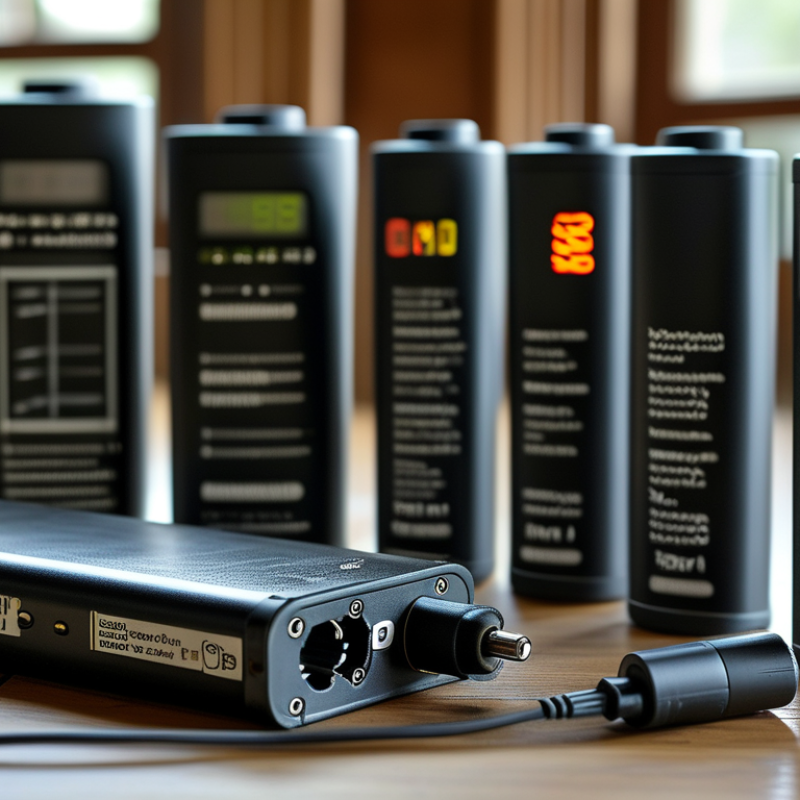
Before choosing a lithium battery charger, identify the battery chemistry and cell configuration. Lithium-ion, lithium iron phosphate, and lithium titanate batteries do not share identical charging limits. Check the battery label, datasheet, or manufacturer’s technical documentation. Do not rely only on the connector shape. Similar plugs can hide different voltage requirements.
Confirm the nominal voltage and maximum charging voltage. A single lithium-ion cell commonly uses a different charge limit from a lithium iron phosphate cell. Battery packs also require the correct series count. For example, a four-cell pack needs a charger designed for four cells, not merely a charger with a matching plug. Charging current matters too. A high-current charger may create excess heat or trigger the battery management system. Slow charging is often safer, but it is not automatically suitable.
Inspect the battery management system and temperature requirements. Some packs stop charging outside a specific temperature range. Never charge a swollen, cracked, wet, or unusually hot battery. Stop immediately if the pack smells sharp or behaves strangely. Use a charger with controlled constant-current and constant-voltage output. In practical inspections, polarity is an easy detail to miss. I have seen careful users check voltage but overlook reversed leads. That mistake can damage equipment quickly. When documentation is unclear, guessing is not a charging method. Contact a qualified technician and measure only with appropriate safety procedures.
Match the Charger Voltage and Current to the Battery Specifications
Choosing Lithium Battery Chargers: 7 Practical Tips
Match the Charger Voltage and Current to the Battery Specifications
A lithium battery charger must fit the battery’s chemistry, nominal voltage, and charging limits. Do not match voltage by appearance or connector shape. Read the battery label, datasheet, or protection-system instructions. A 12-volt pack may require a different charging voltage, depending on its cell arrangement. For example, a four-cell lithium iron phosphate pack commonly charges near 14.6 volts, not 12 volts. That difference matters.
Check current next. The charger’s output current should stay within the battery maker’s stated range. A lower current usually means longer charging and less heat. A higher current can trigger protection, damage cells, or create a fire risk. Never assume a large adapter is better. If the battery accepts 5 amps, using 10 amps is not a safe shortcut. Measure the charger output with suitable equipment when specifications look unclear. I once trusted a similar-looking adapter. That was a poor assumption.
Look for a charger designed for lithium batteries, not a generic power supply. It should use the correct constant-current and constant-voltage profile. Confirm polarity, plug size, temperature limits, and automatic charge termination. The charger should stop or reduce current when the battery reaches its target voltage. Avoid charging a swollen, wet, or unusually hot pack. Keep the battery on a nonflammable surface and remain nearby during charging. Small details prevent expensive mistakes. When data conflicts, pause and ask a qualified technician to verify the battery and charger together.
Choose the Correct Charging Connector and Compatibility Features
Choosing a lithium battery charger begins with the connector, not the price. Match the plug shape, pin layout, and polarity exactly. A similar-looking connector may still damage the battery. Check the battery label and manual before connecting anything.
Confirm the charger’s output voltage matches the battery’s required voltage. Charging current also matters; excessive current can create heat and shorten battery life. Verify the battery chemistry, such as lithium-ion or lithium iron phosphate, because their charging profiles differ. The charger should support the battery’s protection system, including temperature sensing or communication features when required. A physical connection is not enough.
Inspect the cable for secure locking, suitable insulation, and enough thickness for the expected current. I once found a loose connector during a routine equipment check; the charger worked intermittently and created unnecessary risk. Test the connection gently. It should not wobble, spark, or become unusually warm. Look for recognized safety testing and clear electrical ratings. Avoid chargers with vague specifications. The seventh check is practical: confirm the charger fits your actual operating environment, including moisture, dust, and available sockets. I still recheck compatibility before every replacement, because assumptions are easy to make and harder to correct.
Charging Connector Compatibility: Maximum Rated Power
Higher rated power does not guarantee faster charging. Always confirm the charger's voltage and current profile, the device's supported charging standard, and the cable's power rating before selecting a lithium battery charger.
Evaluate Safety Protections, Certifications, and Charging Quality
7 Tips for Choosing Lithium Battery Chargers
Choose a charger with correct voltage, current, and battery chemistry. A lithium iron phosphate pack needs different limits from a lithium-ion pack. Check the battery label and technical datasheet, not only the plug shape. Look for overcharge, short-circuit, over-temperature, and reverse-polarity protection. Thermal control matters. A warm charger may be normal; a hot plastic case is not. Industry testing under IEC 60335-2-29 and IEC 62133-2 can provide useful safety evidence, although standards do not replace careful installation.
Check certification marks and verify them through the testing organization’s public database. Some sellers display impressive symbols without traceable reports. That detail is easy to miss. Select a charger with stable voltage regulation and low ripple, because poor charging quality can stress cells over time. Charging logs, temperature readings, and automatic cutoff features are valuable in professional environments. The International Energy Agency reported that global electric car sales exceeded 17 million in 2024, increasing demand for reliable charging equipment. The U.S. Consumer Product Safety Commission has also warned about fires and injuries linked to defective lithium-ion batteries and charging systems. These reports do not prove every low-cost charger is unsafe, but they justify careful screening. I would also inspect cable strain relief, ventilation, and connector fit before regular use. Cost still matters, but the cheapest option often leaves the most questions.
Compare Charging Speed, Efficiency, Portability, and Overall Value
7 Tips for Choosing Lithium Battery Chargers
A suitable charger must match the battery’s chemistry, voltage, and capacity. Check the label before comparing speed. A higher current can shorten charging time, but it may create more heat and stress. For daily use, measure real charging time, not only the advertised rating. A charger that fills a battery in two hours may waste more energy than a slower, efficient model.
Look for clear efficiency information and a stable output. Poor efficiency often appears as heat, fan noise, or a warm power plug. I once underestimated this detail in a small workshop. The charger worked, but its hot casing made overnight use uncomfortable. Choose temperature monitoring, overcharge protection, and short-circuit protection from a reputable manufacturer. Safety documentation matters more than attractive packaging. Still, specifications can be incomplete. Read them carefully.
Portability also affects value. A compact charger with a strong cable suits field work, while a heavier unit may offer better cooling. Consider the plug type, cable length, display, and storage space. Compare the purchase price with energy use, charging time, warranty support, and expected service life. Cheap is not always economical. The best choice balances speed, efficiency, portability, and dependable protection for your actual routine.

 2 Enterprise Lane, Bedford, PA 15522
  (800) 771-7139
  sales@site_040a9139-525b-4487-aedd-8b22114146ed