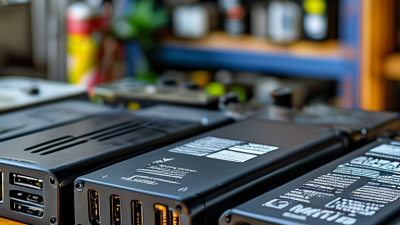
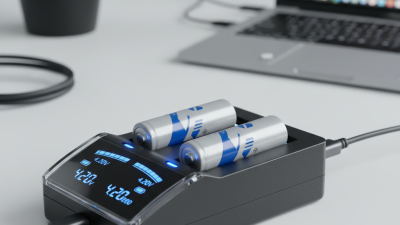
What Are the Top Types of 18650 Chargers?
Choosing an 18650 charger is not just a matter of matching a plug. The right design affects charging time, cell handling, and how clearly a user can spot a problem. The International Energy Agency’s Global EV Outlook 2024 reports that battery demand for electric cars exceeded 750 GWh in 2023, rising about 40% year over year. That figure is not a measure of 18650 charger sales, but it illustrates the expanding role of rechargeable batteries. For individual cells, charger design still matters.
The main types range from compact single-bay USB models to multi-bay units with independent charging channels. Basic models suit occasional use. Smart chargers typically show charging status and manage the charging cycle; analyzer-style units may also test capacity or discharge cells. Features differ by brand, so a display alone does not prove better performance. Check the maker’s cell-size compatibility and instructions. Details matter.
Battery University’s Isidor Buchmann, a battery-industry expert, writes, “Lithium-ion does not need to be fully charged; a partial charge is better.” This practical point helps explain why charging control matters more than flashy features. A charger should match the cell and clearly indicate its status. A warm cell or an uncertain fit deserves attention, not a guess. This guide compares the leading 18650 charger types, their everyday strengths, and their trade-offs. Some categories overlap, and marketing labels can be vague. That is worth keeping in mind.
Basic Single-Bay 18650 Chargers
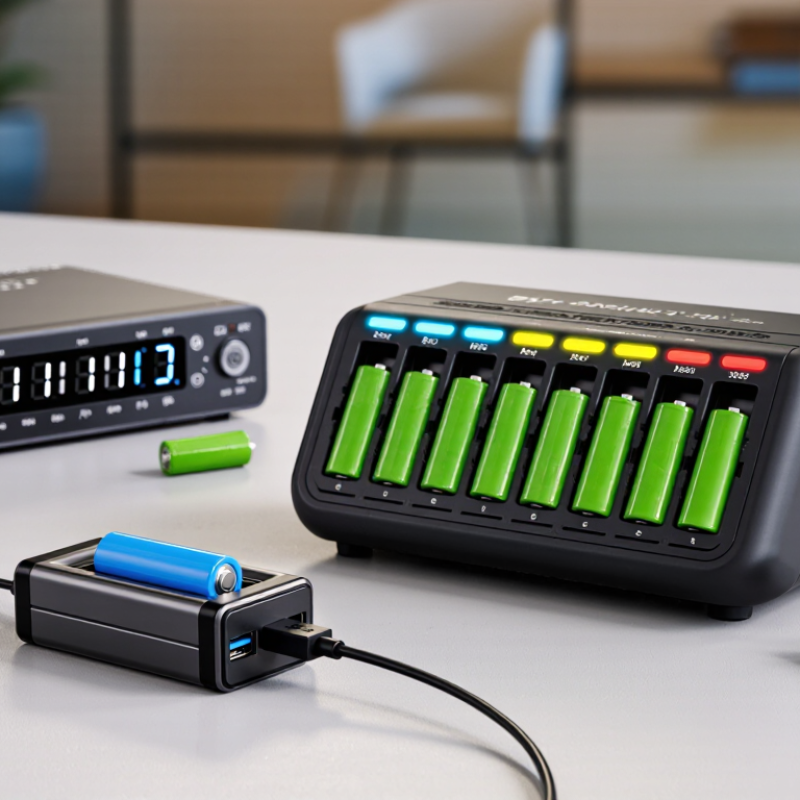
Basic single-bay 18650 chargers are designed to charge one cylindrical cell at a time. Their compact size suits a desk drawer, travel kit, or occasional use. A simple indicator light often shows charging status, while spring-loaded contacts hold the cell in place. One slot means less guesswork. It also means slower preparation when several cells need charging.
Check compatibility before use. “18650” describes a cell size, not its chemistry or charging requirements. Use a charger specified for the exact cell type, and follow the cell manufacturer’s voltage and current guidance. Look for clear polarity markings, overcharge protection, and a firm fit. If a cell rocks, heats unusually, has a torn wrapper, or shows corrosion, stop and do not charge it.
A basic model can be practical, but its simplicity has limits. Some units provide little information beyond a colored light, making progress hard to judge. Place the charger on a dry, nonflammable surface and stay nearby. Avoid charging unattended overnight. Small details matter. Read the manual, and verify specifications rather than guessing.
Multi-Bay Chargers for Charging Several Cells
Multi-bay 18650 chargers let you charge several compatible cells at once, which is useful when a flashlight or camera uses multiple batteries. Models commonly offer two, four, or more slots. Check the charger’s specifications before use: an 18650 cell’s size alone does not confirm that its chemistry or voltage is compatible.
Independent charging channels are especially useful. They monitor each cell separately, so one nearly full battery does not necessarily determine the charging behavior of the others. A clear indicator for every slot makes it easier to spot a cell that charges unusually slowly. Small detail, big difference.
Place the charger on a dry, stable surface with room for airflow. Insert cells according to the polarity marks, and do not charge batteries that are dented, leaking, or visibly damaged. For better consistency, use cells with similar chemistry and condition rather than mixing an old, heavily used cell with a new one. That advice can feel fussy, but it reduces guesswork. I would still check the manual, because bay layouts and safety features vary between models.
Smart Chargers with Individual Cell Monitoring
Smart chargers with individual cell monitoring treat each 18650 slot as a separate charging channel. A clear display can show each cell’s voltage, charging status, and temperature instead of one combined reading. This helps when cells have different ages or starting charge levels.
The IEA’s Global EV Outlook 2024 reports that electric-vehicle battery demand exceeded 750 GWh in 2023, rising about 40% from 2022. That is broad market context, not a test of household chargers.
Look for independent slot readings and charging cutoffs, plus support for your cell’s chemistry and voltage limits. A charger that reports each bay separately makes an unusual reading easier to spot. But monitoring cannot restore a worn or damaged cell, and a charging bay is not the same as cell balancing inside a battery pack. I still check the cell maker’s specifications; charger displays can be easy to misread.
Tips: Keep cells in separate slots, check for heat or damaged wraps, and avoid mixing different capacities. If one reading looks odd, stop and inspect the cell rather than trusting the display alone.
USB-Powered 18650 Chargers for Portable Use
What Are the Top Types of 18650 Chargers?
USB-Powered 18650 Chargers for Portable Use
USB-powered 18650 chargers suit travel because they can draw power from a wall adapter, laptop, or compatible power bank. A short cable and a compact charger fit easily in a small pouch. At a campsite or in a car, that flexibility can be useful. Not every cable works. Check the charger's required input and the power source’s output before connecting them.
Look for clear charge-status indicators and independent charging bays, so each cell can be monitored separately. Built-in safeguards against overcharging, reverse polarity, and excessive heat are valuable features. They do not make careless charging safe, though. Use a charger designed for the cell’s chemistry and voltage; 18650 describes a size, not a complete electrical specification. Check that the cell fits, especially if it has added protection that makes it longer.
USB charging can be slower when the power source supplies limited current, and charging two cells may take longer than charging one. That matters when you need a quick turnaround. Keep cells dry, inspect their wraps for tears or dents, and charge them on a stable, nonflammable surface while nearby. I still find it easy to focus on portability and overlook the power source. A little planning helps.
Vehicle-Powered Chargers for On-the-Go Charging
Vehicle-powered 18650 chargers let drivers recharge compatible cells from a vehicle’s 12-volt outlet or a suitable USB power source. They can be useful on road trips, at remote work sites, or during outdoor activities. A compact charger with clearly marked slots is easier to check in a moving vehicle. Still, it should sit on a stable surface, away from direct sunlight and loose metal objects.
Check that the charger supports rechargeable lithium-ion 18650 cells and matches the vehicle outlet’s power limits. Look for independent charging channels, clear status indicators, and automatic charge termination. Check the details. Some vehicle outlets remain active after the engine is switched off, which can drain the battery. A USB adapter may also provide less power than the charger requires. Read both manuals before connecting them. Keep the cells out of extreme heat, and don’t charge damaged or unusually warm cells. There is a trade-off: a vehicle charger is convenient, but charging speed and reliability depend on the outlet, adapter, and surrounding temperature. Small details matter.
Vehicle-Powered 18650 Charging: Typical Power Sources
These figures show representative available input power: USB-A at 5 V/2.4 A, USB-C Power Delivery at 20 V/3 A, and a 12 V accessory socket at 12 V/10 A. Actual vehicle outputs vary. They are not 18650 cell charging rates; the charger’s input limits, conversion efficiency, and number of charging bays determine the power delivered to the cells.

 2 Enterprise Lane, Bedford, PA 15522
  (800) 771-7139
  sales@site_040a9139-525b-4487-aedd-8b22114146ed