How to Choose a 12V Battery Pack in 2026?

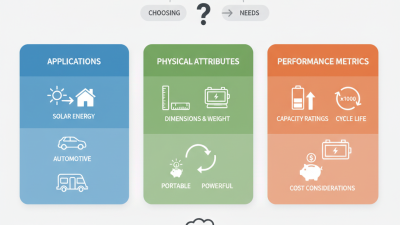
Choosing a 12v battery pack in 2026 requires more than comparing price and advertised capacity. The right decision depends on voltage stability, usable energy, cycle life, safety controls, charging conditions, and physical fit. A pack that looks powerful on paper may perform poorly inside a cold vehicle, emergency system, or compact solar setup.

Recent data supports careful selection. The International Energy Agency reported that global battery demand reached 1 TWh in 2024, driven mainly by electric vehicles and energy storage. BloombergNEF’s 2024 Battery Price Survey also recorded an average lithium-ion pack price of $115 per kWh, showing how rapidly battery economics are changing. These figures do not automatically identify the best 12v battery pack. They only reveal the wider pressure toward higher density, stronger supply chains, and better thermal management.

Isidor Buchmann, founder of Cadex Electronics and Battery University, describes batteries as “a unique product” because their performance changes with age, temperature, and usage. That warning matters. A 12V label is not enough. Check the chemistry, BMS protection, continuous current rating, connector quality, and warranty conditions. Measure the real load, too.

Small details matter.

A 20-amp appliance can expose weak wiring quickly. A poorly matched charger can shorten service life. No single pack fits every application. This guide compares practical specifications, but some recommendations remain imperfect because manufacturers publish different testing methods. Readers should verify actual operating temperatures, dimensions, and certification documents before purchasing.

How to Choose a 12V Battery Pack in 2026?

What Is a 12V Battery Pack and How Does It Work?

How to Choose a 12V Battery Pack in 2026?

What Is a 12V Battery Pack and How Does It Work?

A 12V battery pack stores chemical energy and releases it as electrical power. It usually contains several cells connected in series. Their combined voltage creates the pack’s nominal rating. “12V” is not one exact voltage. That detail matters.

A lead-acid pack may measure about 12.7V when fully charged. A lithium-based pack can reach roughly 14.6V during charging. The voltage gradually falls as energy is used. A battery management system monitors many lithium packs. It can balance cells, limit current, and disconnect the pack during unsafe conditions. Still, protection electronics are not magic.

Capacity is measured in ampere-hours, or Ah. A 12V, 20Ah pack theoretically stores about 240 watt-hours. Real output is lower because temperature, age, wiring, and load affect performance. A motor may also demand a short surge current. Check both continuous and peak ratings.

Match the pack to the device’s voltage range and connector requirements. Confirm the charger uses the correct charging profile. Never rely only on a familiar plug shape. It may fit while using the wrong polarity. I also consider weight, ventilation, storage temperature, and replacement access. These points are easy to overlook. A useful choice on paper may become inconvenient in a cold workshop or inside a cramped enclosure.

How to Match Voltage, Capacity, and Power Requirements

How to Choose a 12V Battery Pack in 2026?

How to Match Voltage, Capacity, and Power Requirements

A 12V battery pack does not always provide exactly 12 volts. Its voltage changes during charging and discharging. Check the equipment’s acceptable voltage range before selecting a pack. A sensitive controller may need a regulated output. A simple lamp may tolerate wider variation.

Measure both running power and starting power. A motor can briefly demand three times its rated wattage. For example, a 60W load draws about 5A at 12V. If it runs for six hours, choose at least 30Ah before allowing for losses. Capacity should exceed the calculation by 20% to 30%. Real conditions are rarely perfect. Cold temperatures, aging, and cable resistance reduce usable energy.

Power is only one part of the match. Confirm the battery’s continuous current rating and short surge rating. The protection circuit must handle the expected load without shutting down. Use a correctly sized fuse near the battery, and select cables that remain cool under load. I once estimated capacity from appliance wattage alone and ignored startup demand. That estimate failed during testing. Now I record measured current with a meter, then compare it with the battery specifications. Leave space for ventilation, secure the pack against movement, and avoid charging outside its stated temperature range.

How to Choose a 12V Battery Pack in 2026?

Match the battery’s voltage, capacity, and discharge capability to the load. The chart estimates the battery capacity required to power different continuous loads for 4 hours, assuming 12V nominal voltage, 90% conversion efficiency, and 80% usable depth of discharge.

Use the capacity estimate as a starting point, then select a pack whose continuous and peak current ratings exceed the load requirements. For example, a 500W load requires approximately 42A at 12V before conversion losses, so the battery, wiring, fuse, and BMS must all support that current.

Which 12V Battery Chemistry Fits Your Application?

A 12V battery pack should match the application’s load profile, temperature, and maintenance limits. Chemistry matters more than the label.

Lead-acid remains practical for engine starting, alarms, and standby systems. It delivers strong short bursts and tolerates simple charging equipment. However, repeated deep discharge quickly reduces usable capacity. A 100Ah lead-acid battery may provide only about 50Ah without excessive stress. Lithium iron phosphate, or LiFePO4, usually offers more usable energy, lower weight, and longer cycle life. It still needs a battery-management system. Charging below freezing can cause permanent damage. That detail is often missed.

Nickel-manganese-cobalt chemistry provides high energy density where space is tight. It needs stricter thermal and electrical protection. LiFePO4 generally suits daily cycling, portable power, and small solar storage better. The International Energy Agency reported that LFP batteries represented nearly half of global electric-car battery deployments in 2024, showing its growing industrial acceptance. BloombergNEF’s 2024 Battery Price Survey placed average lithium-ion pack prices at 115 US dollars per kilowatt-hour. That figure does not predict a complete 12V system cost. Electronics, enclosure quality, certification, and installation can change the result.

Check continuous current, peak current, charge temperature, standby losses, and warranty test conditions. Do not trust cycle-life claims blindly. Test the pack with your real load, including a motor’s starting surge. A battery can look excellent on paper and disappoint beside a cold generator. Reference: International Energy Agency, Global EV Outlook 2025; BloombergNEF, Battery Price Survey 2024.

How to Compare Size, Weight, Runtime, and Charging Needs

How to Choose a 12V Battery Pack in 2026?

A 12V label does not tell the whole story. Compare watt-hours, not amp-hours alone: watt-hours equal volts multiplied by amp-hours. A 12V, 20Ah pack stores roughly 240Wh before conversion losses. Real runtime may be lower. In field testing, inverters, cold weather, and aging commonly reduce usable energy. The U.S. Department of Energy’s Battery500 Consortium targets cell-level energy density above 500Wh/kg, but that remains a development goal, not a typical consumer specification. Current packs still require practical compromises between capacity, weight, and safety.

Weight matters when carrying equipment upstairs or mounting it on a moving platform. Lithium-based packs usually provide more energy per kilogram than lead-acid designs. However, internal protection electronics can add weight. Check the manufacturer’s continuous discharge rating, not only the peak figure. A 120W load draws about 10A from a 12V system, before efficiency losses. For charging, confirm chemistry, charger voltage, connector type, and temperature limits. Lithium packs often use a controlled constant-current and constant-voltage process. Lead-acid charging needs different voltage limits. Mixing chargers is a costly mistake.

Tips: Estimate runtime using usable watt-hours, then divide by actual load. Add a 20% reserve for aging and cold conditions. The International Energy Agency reported continued battery-cost declines in its Global EV Outlook 2024, yet cheaper cells do not guarantee better durability. I would also measure the real load with a meter; advertised consumption can be surprisingly optimistic. Test the pack before relying on it.

What Safety Features and Maintenance Should You Check?

A safe 12V battery pack should have a clearly specified battery chemistry, capacity, and operating temperature range. Check for a built-in battery management system, or BMS. It should help prevent overcharging, deep discharge, excessive current, and dangerous heat. Cell balancing also matters. Without it, one weak cell can reduce the whole pack’s performance.

Inspect the enclosure before buying. It should resist dust, moisture, vibration, and accidental terminal contact. A covered fuse or circuit breaker adds useful protection. Look for charging instructions, wiring diagrams, warning labels, and test information from a recognized safety authority. Do not rely on attractive capacity numbers alone. A pack may advertise high output but provide little protection.

Maintenance is simple, but easy to neglect. Keep terminals clean and tight, then inspect cables for cracked insulation or heat marks. Store the pack in a cool, dry place at the charge level stated in its manual. Use only a compatible charger, and stop charging if the pack swells, smells unusual, leaks, or becomes hot. Measure voltage occasionally with a suitable meter. Yet voltage alone cannot prove battery health. A professional load test may reveal hidden weakness. I would rather replace a questionable pack early than trust one because it still powers a small device. That judgment is not perfect, but safety decisions deserve caution.

How to Choose a 12V Battery Pack in 2026? — Safety Features and Maintenance Checklist

Use this comparison table to evaluate a 12V battery pack for its intended load, operating environment, charging method, safety controls, and maintenance requirements.

Evaluation Dimension Recommended Data or Target What to Check Before Purchase Safety and Maintenance Guidance
Nominal Voltage 12V-class systems commonly use approximately 12.0V for lithium iron phosphate packs and approximately 12.0V for lead-acid systems, although the charging and resting voltages differ by chemistry. Confirm that the battery voltage matches the equipment, charger, inverter, and protection system. Do not connect batteries with different chemistries or incompatible voltage ranges in parallel or series.
Battery Chemistry Common options include lead-acid, absorbed glass mat, gel, and lithium iron phosphate. Compare weight, usable capacity, cycle life, charging limits, ventilation needs, and low-temperature behavior. Lithium packs generally require an integrated battery management system. Lead-acid batteries may require ventilation and careful terminal maintenance.
Rated Capacity Capacity is normally stated in ampere-hours, such as 20Ah, 50Ah, or 100Ah. The stated test conditions should also be provided. Check the capacity test rate and temperature because usable capacity changes with discharge current and environmental conditions. Do not select capacity by ampere-hours alone; calculate energy using voltage multiplied by ampere-hours.
Usable Energy Usable energy is lower than the nominal rating because the battery should not always be discharged completely. Ask for the recommended depth-of-discharge limit and the manufacturer’s usable-energy specification. Leaving a reserve can reduce stress and improve service life, especially under high loads or frequent cycling.
Continuous Discharge Current The continuous current rating must be higher than the equipment’s normal operating current. Compare the rating with the maximum expected load, cable size, fuse rating, and inverter surge requirements. High current can create heat at terminals and connectors. Use correctly sized cables, crimped terminals, and overcurrent protection.
Peak or Surge Current Motors, pumps, compressors, and inverters may draw a short startup surge above their continuous current. Confirm both the surge duration and peak-current rating rather than relying only on the continuous rating. A battery that cannot support startup current may trigger a protection shutdown or cause excessive voltage drop.
Battery Management System For lithium packs, look for protection against overcharge, over-discharge, overcurrent, short circuit, and excessive temperature. Check whether the system includes cell balancing, temperature sensors, fault indication, and reset behavior. A battery management system is a key safety feature, but it does not replace a correctly rated charger, fuse, wiring, or enclosure.
Cell Balancing Balancing helps keep series-connected cells within a similar voltage range. Determine whether balancing is passive or active and whether it operates during charging, discharging, or both. Persistent cell imbalance can reduce capacity and cause early protection cutoffs; investigate repeated imbalance warnings.
Charging Compatibility The charger must use the correct charging profile for the battery chemistry and pack design. Verify charge voltage, maximum charge current, connector polarity, and whether temperature compensation is required. Never use a lead-acid charging profile on a lithium battery unless the battery documentation explicitly permits it.
Low-Temperature Charging Many lithium iron phosphate batteries should not be charged below 0°C unless they include an approved low-temperature charging strategy. Check the specified charge-temperature range and whether the BMS blocks charging when the cells are too cold. Prevent charging a frozen or very cold lithium pack. Warm it within the approved range before charging.
Operating Temperature Typical operating limits vary by chemistry and design; many packs specify a wider discharge range than charge range. Read the exact charge, discharge, and storage temperature limits in the technical documentation. Keep the battery away from direct heat, flames, water ingress, and poorly ventilated enclosures.
Short-Circuit Protection The pack should have electronic or fuse-based protection, while the installation should also have a correctly rated external fuse. Check the interrupt rating, response behavior, fuse location, and accessibility for replacement. Install the main fuse as close as practical to the battery’s positive terminal to reduce unprotected cable length.
Overcurrent Protection Protection should be matched to the battery’s maximum current and the connected equipment. Confirm that the protection device can handle normal startup current without nuisance trips. Never bypass a fuse, circuit breaker, or BMS shutdown to keep equipment running.
Enclosure and Ingress Protection The enclosure should suit the installation environment. An IP rating may be relevant for dust and water exposure. Check the stated IP rating, venting requirements, mounting method, connector sealing, and drain path. An IP rating does not make a battery suitable for immersion, corrosive chemicals, or every outdoor installation.
Terminals and Connectors Terminals must support the expected current and cable size without excessive heating. Inspect polarity markings, terminal torque specifications, connector locking, and protection against accidental contact. Keep terminals clean and tight. Cover exposed positive terminals to reduce the risk of short circuits.
State-of-Charge Monitoring Useful options include voltage monitoring, coulomb counting, a display, or a communication interface. Check measurement accuracy, alarm functions, data access, and whether the monitor is compatible with the battery chemistry. Voltage alone may not accurately indicate lithium battery state of charge under load or during charging.
Cycle Life Cycle-life figures should state the depth of discharge, charge and discharge current, temperature, and end-of-life capacity. Compare batteries using the same test conditions rather than comparing cycle counts without context. Lower discharge depth, moderate temperatures, and avoiding prolonged full or empty storage can support longer service life.
Self-Discharge and Storage Self-discharge varies considerably by chemistry and electronics. Long-term storage requirements should be specified. Check the recommended storage state of charge, inspection interval, and whether the battery should be disconnected from loads. Store in a cool, dry, nonflammable location. Prevent parasitic loads from deeply discharging the pack.
Routine Inspection Inspect terminals, cables, enclosure condition, swelling, leakage, corrosion, odor, and unusual heating. Perform visual checks before installation and periodically during service, especially in vibration or high-temperature environments. Stop using and isolate a battery that is swollen, leaking, cracked, smoking, unusually hot, or producing a strong abnormal odor.
Maintenance Requirements Sealed lithium and sealed lead-acid products usually need less routine maintenance than flooded lead-acid batteries. Confirm whether electrolyte inspection, watering, terminal cleaning, equalization, or ventilation is required. Follow the battery documentation. Do not open a sealed pack or add liquid unless the design specifically requires it.
Compliance Documentation Look for applicable transport, electrical safety, and battery-system documentation for the intended region and use. Request a datasheet, safety instructions, charging limits, test reports, and disposal or recycling guidance. Documentation should identify the battery chemistry, operating limits, emergency procedures, and approved charging equipment.
End-of-Life Handling 12V battery packs should be recycled through an appropriate battery collection or hazardous-waste channel. Check local recycling requirements and whether the battery must be isolated or packaged for transport. Do not place lithium or lead-acid batteries in general household waste, incinerate them, or short their terminals.

Important: Always use the battery manufacturer’s technical documentation for exact voltage limits, current ratings, temperature ranges, installation torque, charging procedures, and emergency handling instructions. When in doubt, consult a qualified electrical professional.