2 Enterprise Lane, Bedford, PA 15522
 (800) 771-7139
 sales@site_040a9139-525b-4487-aedd-8b22114146ed

Choosing a reliable 12v battery pack manufacturer in China requires more than comparing catalog prices. Wholesale buyers need consistent capacity, stable voltage output, safe materials, and dependable production schedules. This guide introduces ten manufacturers serving different markets, including mobility devices, backup systems, solar equipment, and industrial tools.
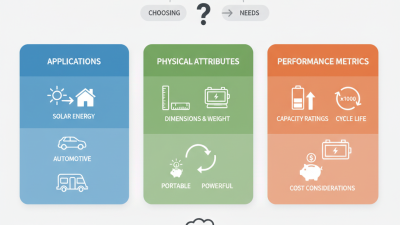
Quality varies by application. A compact lithium battery may suit portable equipment, while a high-cycle pack may better support daily commercial use. We examine each company’s manufacturing experience, battery chemistry, cell sourcing, protection systems, testing procedures, customization services, minimum order quantities, and export support. Certification claims should still be verified with current documents. Details matter.
The selection also considers practical buyer concerns. Can the supplier provide samples before mass production? Are wiring, connectors, labels, and enclosures customizable? Does the factory test thermal performance, charging safety, and cycle life under controlled conditions? These questions often reveal more than a polished website. Performance matters.
No ranking can fit every buyer. A manufacturer with strong engineering support may not offer the lowest unit price. Another supplier may provide flexible packaging but limited after-sales communication. Product data can change, and factory capabilities may depend on order volume. Buyers should confirm specifications, compliance requirements, lead times, warranty terms, and shipping arrangements directly before signing an agreement. This article offers a practical starting point, not a substitute for technical validation. The goal is a clearer comparison, supported by observable manufacturing information and realistic wholesale considerations.
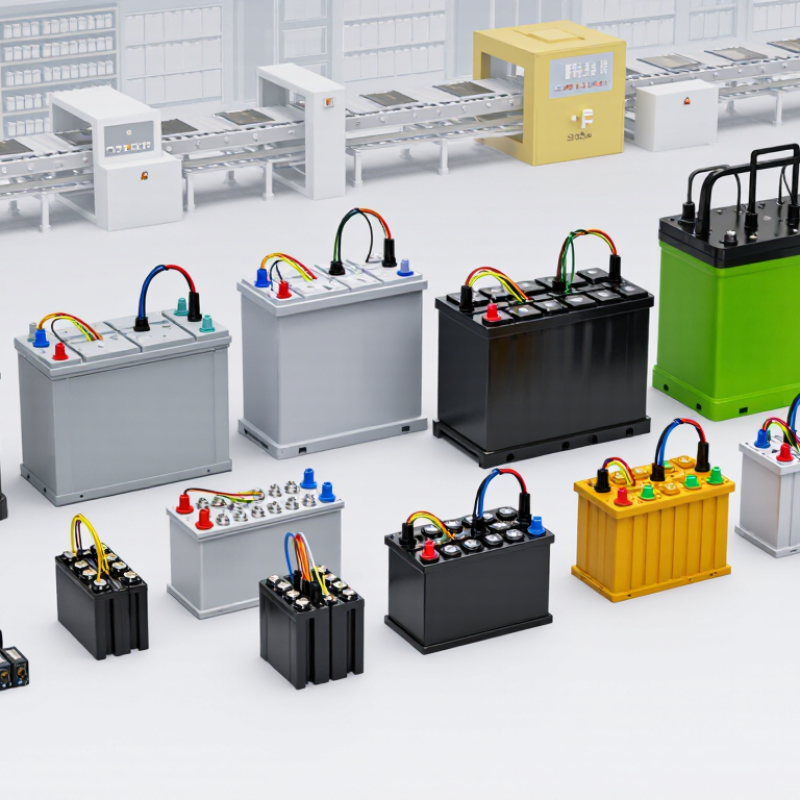
A reliable 12V battery pack manufacturer proves performance beyond a polished showroom. For wholesale buyers, factory experience matters. Ask how cells are sorted, welded, insulated, and tested before shipment. A dependable supplier should provide capacity records, cycle data, BMS specifications, and clear production traceability.
Quality control must be visible. Samples should match mass-production units in voltage, capacity, connector design, and casing strength. Safety testing should cover overcharge, short circuit, temperature rise, and vibration. Certifications are useful, but documents alone cannot reveal weak welding or inconsistent cells. No supplier is perfect. Even experienced teams can miss a packaging issue or misread a test result.
Tips: Request a factory video call during production. Compare three sample packs under the same load. Check whether test reports include dates, equipment details, and measured values. Confirm warranty terms, replacement procedures, minimum order quantities, and lead times in writing. Reliable manufacturers explain problems directly instead of promising impossible delivery dates.
Wholesale buyers should also examine engineering support. Can the manufacturer adjust voltage protection, cable length, enclosure size, or communication functions? Can it maintain the same specification after several production batches? A practical supplier keeps retained samples and responds with measurable corrective actions. Small details matter, such as labeled cartons, moisture protection, and consistent serial numbers. These details may seem boring, but they often reveal whether a manufacturer manages quality daily.
The following table provides a fact-based, brand-neutral framework for evaluating ten essential manufacturer capabilities when sourcing wholesale 12V battery packs from China. It does not assign company rankings or disclose brand data.
| No. | Reliability Dimension | What a Reliable Manufacturer Should Demonstrate | Relevant Technical Data or Standard | Wholesale Evaluation Method |
|---|---|---|---|---|
| 1 | Chemistry and Nominal Voltage Accuracy | Clearly identifies the battery chemistry, cell configuration, nominal voltage, charging voltage, and discharge limits for every model. | Li-ion: 3S ≈ 11.1V nominal LiFePO₄: 4S ≈ 12.8V nominal Lead-acid: 6 cells ≈ 12V nominal | Request a complete electrical specification sheet and compare the stated voltage range with the customer’s equipment requirements. |
| 2 | Cell Quality and Traceability | Uses cells with documented specifications and maintains traceability from incoming materials to finished battery packs. | Cell model, production lot, date code, supplier documentation, incoming inspection records, and batch identification should be available. | Ask for anonymized sample records, cell test reports, and the manufacturer’s lot-tracking procedure. |
| 3 | Battery Management System Protection | For lithium battery packs, the BMS should protect against overcharge, over-discharge, overcurrent, short circuit, and abnormal temperature conditions. | Protection thresholds must match the cell chemistry, series count, charger, load, and expected operating temperature. | Review the BMS specification, protection response data, balancing method, and sample test results before mass production. |
| 4 | Safety and Transport Compliance | Provides appropriate safety and transportation documentation for the selected chemistry and destination market. | UN 38.3 IEC 62133-2 UL 1642 UL 2054 | Verify that reports identify the same battery model, cell configuration, capacity, and manufacturing entity as the quoted product. |
| 5 | Capacity and Energy Verification | Confirms rated capacity under a defined test method instead of relying only on nominal labeling. | Capacity should be stated in Ah, with test current, end-of-discharge voltage, ambient temperature, and conditioning procedure. | Request pre-shipment capacity data and conduct independent sampling using an agreed test protocol. |
| 6 | Cycle-Life Test Method | Publishes cycle-life claims together with the conditions that define end of life. | Cycle life depends on chemistry, depth of discharge, charge/discharge current, temperature, and capacity-retention threshold. | Reject unsupported claims such as “long life” unless the supplier provides test conditions and capacity-retention criteria. |
| 7 | Thermal and Environmental Performance | Defines operating, charging, storage, and transportation temperature limits for the complete pack. | Temperature limits must account for cells, BMS components, enclosure materials, charger compatibility, and application environment. | Request temperature test records and confirm whether the design includes a temperature sensor or thermal cutoff where required. |
| 8 | Mechanical and Enclosure Protection | Provides a mechanically stable enclosure with protected terminals, secure cell fixation, insulation, and suitable cable strain relief. | Ingress protection ratings, when claimed, should be evaluated according to IEC 60529 and must apply to the complete assembled product. | Inspect samples for impact resistance, vibration protection, connector security, sealing quality, and serviceability. |
| 9 | Manufacturing Quality System | Uses documented production procedures, inspection checkpoints, nonconformance controls, and corrective-action processes. | ISO 9001 Process control Final inspection Traceability | Review the quality manual, inspection plan, calibration records, defect-handling process, and audit readiness. |
| 10 | Wholesale Supply and After-Sales Capability | Can maintain consistent specifications, communicate lead times, support customization, and handle warranty claims systematically. | Key commercial indicators include minimum order quantity, sample lead time, production lead time, batch consistency, packaging requirements, and warranty terms. | Use a written quotation, approved sample, inspection standard, change-control procedure, and clearly defined warranty process. |