Why Source Lithium Batteries from Canada?

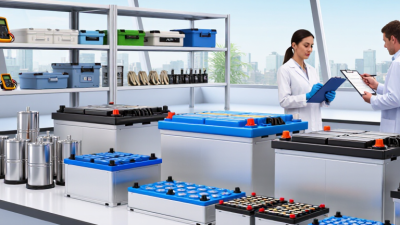
Sourcing lithium batteries from Canada can offer buyers a closer view of where materials come from, how cells are tested, and how suppliers manage delivery. Canada has lithium-bearing deposits, experienced mining communities, and battery projects at different stages of development. But a Canadian label alone does not prove a battery is safer, cleaner, or better made. Buyers still need clear specifications, traceable documentation, and realistic delivery commitments.

For companies comparing lithium batteries canada suppliers, location can matter in practical ways. A shorter route may simplify communication and reduce some shipping uncertainty. Regional production may also help manufacturers coordinate samples, inspections, and technical support. Yet weather, transport distances, and project timelines can complicate plans. A pallet arriving late still disrupts a production line. Details matter.

Battery scientist Jeff Dahn of Dalhousie University has spent decades studying lithium-ion battery performance. In paraphrase, a useful lesson from his research is that durability deserves attention alongside headline capacity. That is not a verbatim quotation, and it should not replace supplier-specific evidence. Ask for cycle-life conditions, operating-temperature ranges, safety test records, and warranty terms. Request the exact cell or pack configuration, too. Small differences can change performance. Canada may be a compelling sourcing option, but careful verification remains essential. That part is less exciting. It is also where dependable purchasing begins.
Why Source Lithium Batteries from Canada?

Canada’s Lithium Battery Resources and Supply Chain

Canada’s Lithium Battery Resources and Supply Chain

Canada’s lithium story begins with varied geology. Hard-rock deposits in provinces such as Quebec sit alongside lithium-bearing brines in western Canada.

The U.S. Geological Survey’s Mineral Commodity Summaries 2025 estimates Canadian mine production at 4,000 metric tons in 2024, with reserves of 1.2 million metric tons of lithium content. These are different measures: reserves are not the same as immediately available supply.

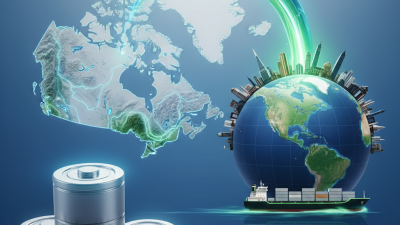
A domestic chain could connect extraction with processing, battery-material production, cell manufacturing, and recycling. Canada also offers established transport links and access to North American markets. That matters because the International Energy Agency’s Global Critical Minerals Outlook 2024 describes concentrated processing capacity as a supply-chain vulnerability.

Still, mineral wealth alone does not guarantee local battery production. Permitting, infrastructure, skilled labour, and processing capacity all take time to develop. The chain is promising, not seamless.

Tips: Ask suppliers to identify the mine or brine source, processing location, and traceability documents. Check whether quoted volumes are current production or future project capacity. Those details are easy to blur—and worth checking.

Battery Manufacturing Capabilities Across Canada

Canada’s battery manufacturing map is regional, not uniform. Ontario’s automotive corridor supports cell, module, and pack integration. Quebec combines hydroelectric power with battery-material processing and manufacturing projects. British Columbia contributes mineral expertise, engineering, and recycling activity. These capabilities can shorten supply lines, but a provincial footprint does not guarantee nearby, ready-to-ship cells.

BloombergNEF ranked Canada second in its 2023 lithium-ion battery supply-chain assessment, which considered factors beyond factory output. The International Energy Agency reported that global battery-cell manufacturing capacity reached about 2.2 terawatt-hours in 2023—nearly three times electric-vehicle battery demand. That gap matters. It means buyers should check actual production, qualification status, and available capacity, rather than relying on announced projects.

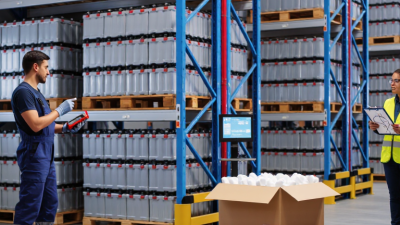
For procurement teams, ask where cells are made, where packs are assembled, and how components move between sites. A cold-weather delivery route or a delayed materials shipment can affect schedules. Some Canadian projects remain under development, so capacity on paper may not equal production today. It is not seamless. Site visits, audited quality records, and clear delivery commitments help distinguish operational capability from future plans.

Environmental Standards and Responsible Sourcing

Why Source Lithium Batteries from Canada?

Canadian sourcing can offer stronger visibility into environmental controls, but origin alone is not proof of responsible production. The International Energy Agency’s Global Critical Minerals Outlook 2024 projects lithium demand will more than triple by 2035 in its stated-policies scenario. That pressure makes water use, land disturbance, and mine-waste management important questions for battery buyers.

Canada’s Energy Fact Book 2024–25 reports that 82% of Canadian electricity came from non-emitting sources in 2022. This is a useful backdrop, not a mine-level guarantee: operations may use different energy sources, and processing can occur elsewhere. Not automatically. Ask suppliers for site-specific energy and water data, environmental monitoring results, and traceability covering refining and cell production. Frameworks such as Towards Sustainable Mining provide indicators for areas including tailings management and Indigenous relations, but buyers should check which sites and facilities are actually assessed.

Responsible sourcing also means looking beyond a clean-looking certificate. A shipment record, for example, should connect the mine, processor, and battery material rather than stop at the first supplier. Independent audits help, yet they can miss local concerns or changing conditions. There is room for doubt. Compare reported water withdrawals against local water stress, and ask how spills, habitat disruption, and community feedback are tracked over time.

Why Source Lithium Batteries from Canada? — Environmental Standards and Responsible Sourcing

Canada’s electricity mix offers useful context when assessing the potential emissions of energy-intensive mineral processing.

How to read this: Non-emitting sources include hydro, nuclear, wind, solar, and other non-emitting generation. A cleaner grid can support lower-emissions processing, but this national figure does not represent a specific mine or establish the life-cycle footprint of any lithium product.

Source: Canada Energy Regulator, Canada’s electricity generation data for 2022. Percentages are rounded.

Advantages of Sourcing Lithium Batteries from Canada

Why Source Lithium Batteries from Canada?

Canada offers practical advantages for buyers seeking reliable lithium battery supply. Its established mining sector and growing battery ecosystem can support closer coordination between raw-material processing, cell production, and end-use applications. The supply chain is still developing, though, so availability varies by product and supplier.

For North American projects, shorter transport routes may simplify delivery planning and communication. Teams can discuss specifications, documentation, and quality checks across familiar time zones.

Small detail, real value.

A sourcing review should still confirm where cells are manufactured, which components are imported, and how each production batch is tested. A Canadian business address alone does not establish Canadian manufacturing.

Climate expertise can also matter. Batteries used in northern communities, outdoor equipment, or cold-region energy systems may need careful performance evaluation at low temperatures. Ask for test conditions, usable capacity data, and guidance on charging in cold weather. Results depend on the battery design and operating conditions, not just its country of origin.

The picture is not flawless: costs, production capacity, and lead times can differ widely. Comparing written specifications and delivery commitments helps buyers judge whether Canadian sourcing fits the project.

Key Factors When Choosing a Canadian Battery Supplier

Why Source Lithium Batteries from Canada?
Key Factors When Choosing a Canadian Battery Supplier

Choosing a Canadian battery supplier starts with your application, not a catalogue headline. Define the required voltage, capacity, discharge rate, operating temperature, and available space. Ask how the supplier verifies battery performance and handles quality checks. Reliable answers should include relevant test information, product specifications, and practical storage guidance. Vague claims need follow-up. For cold-weather installations, confirm the battery’s operating limits rather than assuming it will perform well outdoors.

Tips: Share your equipment details and expected duty cycle before requesting a quote. Ask about lead times, shipping conditions, warranty terms, and support if a battery arrives damaged. Keep written specifications for comparison. Small details matter.

Also consider traceability and communication. Can the supplier identify the battery configuration and explain how changes are documented? Do representatives respond clearly to technical questions? These details can help prevent mismatched batteries and delays, though no checklist catches every problem. Request a sample specification sheet and review it with a qualified technician when the application is safety-critical. A lower price may look appealing, but unclear documentation can cost time later. Some buyers, myself included, may focus too heavily on price at first; it is worth reconsidering what dependable support is worth.

Why Source Lithium Batteries from Canada? — Key Factors When Choosing a Canadian Battery Supplier
Evaluation Factor Canadian Context What to Verify with a Supplier
Access to lithium resources Lithium is included in Canada’s Critical Minerals Strategy. Canadian mineral resources create potential for domestic supply, but a resource or exploration project does not necessarily mean that battery-grade lithium is currently being produced. Ask where the lithium and other key materials originate, whether they are currently available at commercial scale, and whether the supplier can document material origin and chain of custody.
Domestic processing and supply-chain depth Mining, chemical conversion, cell manufacturing, and battery-pack assembly are distinct stages. Canadian activity at one stage should not be taken as proof that every stage of a battery’s supply chain is located in Canada. Request a stage-by-stage supply-chain map, including the locations of cell production, pack assembly, and any material processing. Confirm which steps are performed by the supplier and which are subcontracted.
Electricity and production footprint Canada’s electricity mix varies by province and territory. Hydropower, nuclear power, wind, natural gas, and other sources contribute in different proportions, so a Canadian production location alone does not establish a battery’s carbon footprint. Ask for the production-site location, electricity and emissions methodology, reporting period, and supporting documentation. Compare figures only when system boundaries and calculation methods are consistent.
North American logistics Canadian production may be geographically convenient for buyers in Canada and parts of the United States, but actual delivery time and cost depend on the factory location, destination, transport mode, customs processing, and inventory availability. Confirm shipping origin, quoted lead time, delivery terms, customs responsibilities, stock location, and contingency plans. Do not assume a Canadian supplier automatically offers shorter delivery times.
Trade and origin requirements Canada participates in the Canada–United States–Mexico Agreement (CUSMA/USMCA). Whether a particular battery qualifies for preferential tariff treatment depends on applicable product-specific origin rules and the facts of its production. Request the product’s tariff classification and written origin documentation. Have a qualified customs professional confirm eligibility for the intended shipment and destination.
Product safety and transport compliance Lithium batteries are regulated for transport. UN Manual of Tests and Criteria, subsection 38.3, contains tests relevant to lithium battery transport; applicable transport rules depend on the product and shipment. Request the applicable UN 38.3 test summary and confirm that the battery model, configuration, and shipment meet the relevant transport requirements. Check any additional requirements for the intended application and market.
Application-specific testing Requirements differ for applications such as stationary energy storage, industrial equipment, mobility, and consumer products. A certification or test report for one model or use case may not cover another. Match test reports and certifications to the exact battery model, configuration, and end use. Verify the required standards with the relevant authority, testing laboratory, or system integrator.
Cold-weather performance Low temperatures can affect lithium-ion battery charging and available performance. Operating limits depend on cell chemistry, battery design, controls, and thermal management. Review the datasheet for charge, discharge, and storage temperature limits. Ask for test data under the expected conditions and confirm whether heating or other thermal controls are needed.
Warranty and after-sales support Warranty coverage, service capacity, and replacement arrangements are set by the supplier and are not guaranteed by the product’s country of origin. Check warranty duration, capacity-retention terms, exclusions, claim process, repair or replacement location, technical-support hours, and availability of spare parts.
End-of-life planning Battery collection and recycling options depend on battery type, location, transport rules, and available recycling channels. A supplier’s Canadian presence does not by itself establish a take-back or recycling service. Ask whether the supplier offers documented take-back guidance or recycling arrangements, who pays related costs, and how batteries must be stored and transported at end of life.