
 2 Enterprise Lane, Bedford, PA 15522
 (800) 771-7139
 sales@site_040a9139-525b-4487-aedd-8b22114146ed

A busy stockroom can change quickly. A carton moves from a receiving dock to a shelf, then disappears into a crowded aisle. When staff rely only on manual counts or barcode scans, locating items and updating records can take time. Rfid Inventory Software helps businesses track tagged goods through radio-frequency identification readers and inventory systems. Depending on the setup, teams can capture item movements without scanning every label one by one. That can make routine tasks faster.
The value goes beyond speed. More timely inventory records can help teams spot misplaced stock, prepare replenishment orders, and check whether physical items match system records. A retailer might use readers near a back-room doorway to record tagged products moving between storage and sales areas. A warehouse could review movement data before investigating a missing carton. Small details matter. Better visibility can support clearer decisions, but it does not guarantee perfect counts or eliminate every error.
Results depend on practical choices: tag quality, reader placement, software integration, and staff training. A poorly positioned reader may miss a movement, while duplicate or incomplete records can still require human review. The first rollout may feel messy. That is worth admitting. Businesses should test the system in a defined area, compare its records with physical counts, and adjust procedures before expanding. This article explores why organizations adopt RFID inventory software, what benefits they can reasonably expect, and which limitations deserve attention before they invest.
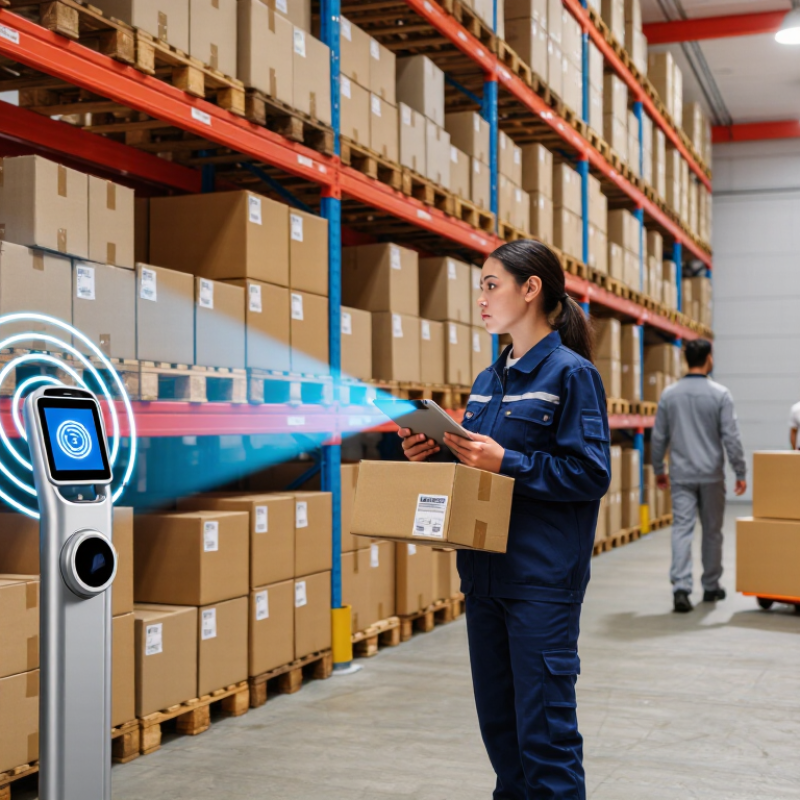
RFID inventory software connects item-level tags, readers, and a shared data record. A tag carries an identifier, not a full product history. Handheld readers scan shelves; fixed portals can register cartons moving through a stockroom doorway. The software matches each read to an item, location, and timestamp. A worker can then check a screen against the shelf in front of them.
The Auburn University RFID Lab’s retail research, cited in GS1 US materials, has reported inventory accuracy improving from roughly 63% to 95% in RFID-enabled operations. IHL Group’s 2023 Inventory Distortion report estimated that global retail inventory distortion costs about $1.8 trillion annually. These figures show the stakes, but they are not guarantees for every store. Tagging coverage, reader placement, and staff routines all affect results.
Small details matter. A missed read can leave an item recorded in the wrong aisle. Metal shelving and liquid products may also interfere with signals, so teams often test placement before a full rollout. Not magic. Software should flag stale counts and uncertain reads, rather than quietly treating every scan as truth. Even a well-designed system still needs people to investigate mismatches.