Top NiMH Battery Chargers for Global Buyers

Choosing the right NiMH battery charger can prevent wasted money, damaged cells, and disappointing performance. Global buyers often compare charging speed, battery compatibility, safety controls, and regional power support. This guide examines leading options for household, professional, and travel use.

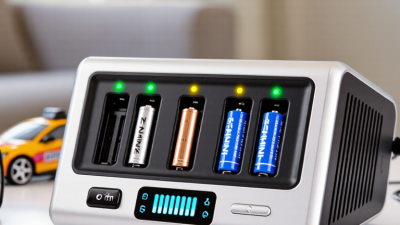
A dependable nimh battery charger should identify battery condition, manage charging current, and stop safely when cells reach capacity. Important features include individual charging channels, temperature monitoring, reverse-polarity protection, and clear status indicators. A charger that handles AA and AAA cells may suit cameras, toys, microphones, and emergency equipment. However, compatibility claims require careful checking. Some models accept only specific NiMH formats.

Practical experience matters here. A charger may perform well with fresh 2,000 mAh cells but struggle with older batteries. Charging times can also vary between brands, temperatures, and battery conditions. Real-world testing should include mixed capacities, partially discharged cells, and repeated charging cycles. Specifications remain useful, but they do not tell the entire story.

Small details matter.

This comparison considers product documentation, safety features, user feedback, warranty clarity, and power-plug requirements. International buyers should verify voltage input before ordering, especially when purchasing from another region. USB-powered models offer flexibility, while mains-powered units may provide steadier output. Neither design is perfect. Some displays are hard to read, and some compact chargers sacrifice cooling space. The final recommendations aim to balance reliability, charging control, portability, and long-term value. Buyers should still inspect current specifications before purchase.
Top NiMH Battery Chargers for Global Buyers

NiMH Battery Basics and Charger Compatibility

Top NiMH Battery Chargers for Global Buyers

NiMH Battery Basics and Charger Compatibility

Nickel-metal hydride cells usually provide 1.2 volts, not the 1.5 volts printed on alkaline batteries. A four-cell pack therefore has a 4.8-volt nominal rating. Capacity matters more. A 2,000 mAh cell should not be charged like a 900 mAh cell. Charging current should match the manufacturer’s stated rate, commonly expressed as C-rate.

A compatible charger detects charge completion through voltage change, temperature rise, or timed control. IEC 61951-2 covers safety and performance requirements for sealed NiMH cells. Basic chargers may use a slow 0.1C charge for roughly 14 to 16 hours. Smarter models can charge faster, but they need reliable temperature sensing and termination controls. Never mix cells with different capacities, ages, or charge levels. They rarely behave evenly.

Global buyers should check input specifications, plug format, cell size, and the number of charging channels. A 100–240-volt input supports many regions, but it does not guarantee safe operation. The charger must also match AA, AAA, C, D, or rechargeable packs correctly. A universal label can mislead. In practical use, warmth is expected; excessive heat is not. The imperfect part is battery aging. Capacity falls gradually, and one weak cell can reduce the whole pack’s performance. The 2024 Global E-waste Monitor reported 62 million tonnes of electronic waste worldwide, with only 22.3% formally collected and recycled. Careful charging and verified recycling remain important details, not marketing extras.
Key Features That Define a High-Quality NiMH Charger

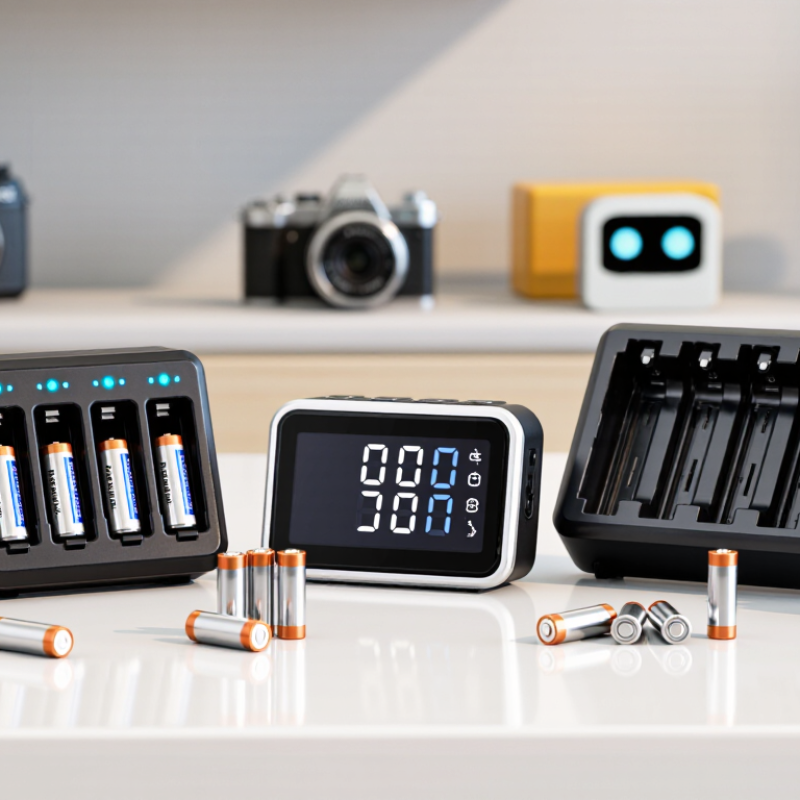
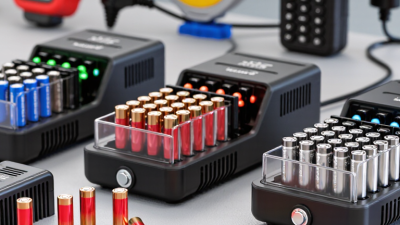
A high-quality NiMH charger should manage each battery separately. Independent charging reduces uneven capacity and prevents one weak cell from controlling the cycle. Look for automatic voltage detection, temperature monitoring, and reliable overcharge protection. A clear display should show charging progress, errors, and completed cells without confusing symbols. For global buyers, a 100–240V input is practical, but the plug type still needs checking. Compatibility with both AA and AAA batteries adds useful flexibility for households and field equipment.

Tips: Choose adjustable charging currents when possible. Lower currents usually create less heat. Keep ventilation around the charger. Test older batteries before trusting them for important equipment. A charger may stop correctly, yet a damaged cell can still become warm. That detail is easy to miss.

Durable contacts should grip batteries firmly without scratching them. A solid housing, cool operation, and a protected cable often reveal better engineering than a bright screen. Look for safety information based on recognized testing standards, and confirm the seller provides clear technical specifications. In practical use, charging time matters, but temperature matters more. I would not select the fastest model automatically. Speed can be useful, though it may reduce efficiency or increase heat. No charger is perfect, so buyers should compare protection features, replacement support, and real operating conditions.

How to Compare NiMH Chargers for Global Use

Top NiMH Battery Chargers for Global Buyers

How to Compare NiMH Chargers for Global Use

A practical comparison starts with electrical compatibility. Check whether the charger accepts 100–240V input. This range supports many household systems worldwide. The plug shape still matters, so confirm the correct regional adapter. A charger may work electrically but remain inconvenient during travel. Look for clear manuals, stable charging control, and recognized safety testing. These details show more reliability than attractive packaging.

Compare charging channels carefully. Independent channels can detect each battery’s condition and reduce uneven charging. Temperature monitoring is valuable during long charging sessions. Automatic shutoff also helps prevent unnecessary heat. Check support for common sizes, such as AA and AAA, before buying. Some units claim broad compatibility but handle certain cells poorly. That difference is easy to miss.

Tips

Test the charger with matched NiMH cells first. Do not mix old and new batteries in one session. Watch for unusual heat, noise, or charging delays. A display is useful, but it is not proof of accuracy. Check charging current against the battery maker’s guidance. Lower currents are often gentler, though they require more time. Fast charging can be convenient, but it demands better temperature control. I would not choose speed alone. Portability, replacement cables, warranty access, and readable instructions deserve equal attention. No charger is perfect. The best choice depends on travel frequency, battery sizes, local power, and your tolerance for waiting.

Safety Standards, Voltage Requirements, and Travel Considerations

Top NiMH Battery Chargers for Global Buyers

Safety Standards, Voltage Requirements, and Travel Considerations

A reliable NiMH charger should show clear electrical ratings and recognized safety certification. Look for protection against overcharging, overheating, short circuits, and reversed cells. Independent charging channels are useful because mixed-capacity batteries rarely charge evenly. Temperature monitoring adds practical protection during long charging sessions. I prefer chargers that display each slot separately. One weak cell should not hide behind three full indicators.

Check the input label before ordering. A charger marked 100–240V and 50/60Hz usually suits many electrical systems worldwide. A plug adapter changes the plug shape, not the voltage. That distinction matters. Using a 120V-only charger on a 230V supply can cause serious damage. The output must also match the battery type, size, and cell count. NiMH cells need a compatible charging method, not a generic USB connection. I once trusted a convenient label too quickly. The batteries became warm, and I stopped the test.

Travel creates smaller but important problems. Choose a compact charger with a removable cable and sturdy slot covers. Pack batteries in a case, not loose beside metal objects. Most travelers should keep rechargeable cells protected in carry-on luggage, but airline policies can differ. Check the current carrier rules before departure. A dual-voltage charger reduces equipment, yet it still needs the correct regional plug adapter. Some chargers are impressively small. Their ventilation can be disappointing. Avoid covering vents in hotel rooms, and inspect the cable for damage before use.

Top NiMH Battery Chargers for Global Buyers - Safety Standards, Voltage Requirements, and Travel Considerations

Charger Profile Typical Battery Support Typical Charging Method Recommended Safety Features Input Voltage Requirement Travel Suitability Key Buying Considerations
Compact AA/AAA Smart Charger NiMH AA and AAA cells; usually 2–4 independent charging channels Individual-channel charging with automatic termination; approximately 0.3C–0.5C is common for faster charging Temperature monitoring, reverse-polarity protection, short-circuit protection, overcharge protection, and a safety timer Prefer 100–240 V AC, 50/60 Hz for worldwide use; some models require a separate USB power adapter Very good for carry-on luggage because of its small size and low weight Confirm independent charging channels so partially used cells can be charged safely together
Universal NiMH Charger AA, AAA, C, D, and sometimes 9 V rechargeable NiMH batteries Selectable or automatic current control; charging time depends on cell capacity and selected current Independent channels, temperature sensing, incorrect-cell detection, reverse-polarity protection, and automatic shutoff 100–240 V AC input is preferred; check whether the supplied plug is compatible with the destination country Suitable for international travel, but larger than an AA/AAA-only charger Check whether C and D cells charge through dedicated contacts or adapter sleeves, and verify the supported 9 V battery format
USB-Powered NiMH Charger Most commonly AA and AAA NiMH cells Powered from USB-A or USB-C; charging performance depends on the power adapter, cable, and charger design Overcurrent, overtemperature, short-circuit, reverse-polarity, and timer protection The charger normally accepts low-voltage USB power; the wall adapter must support the local AC voltage Excellent for travel when used with a certified multi-voltage USB power adapter Check the required USB input current and whether a wall adapter is included; USB power alone does not guarantee universal AC compatibility
Low-Rate Overnight Charger AA, AAA, C, or D NiMH cells, depending on the channel design Approximately 0.1C constant-current charging; a fully discharged cell commonly requires about 14–16 hours A timer and temperature control are strongly recommended; simple continuous charging should not be left unattended Use only at the voltage and frequency printed on the charger; do not connect a single-voltage model to an incompatible supply Acceptable for hotel-room use when the input rating matches the local supply Best for routine overnight charging rather than rapid turnaround; follow the battery manufacturer's charging instructions
Rapid Smart Charger Usually AA and AAA NiMH cells; some models also support C or D cells Approximately 0.3C–0.5C charging with negative-delta-V, temperature, and timer termination; typical times vary from about 2–5 hours Independent channels, thermal cutoff, negative-delta-V detection, safety timer, and fault indication A universal 100–240 V, 50/60 Hz input is preferred for global buyers Good for travel when the charger is compact and the plug or power cord can be adapted safely Fast charging can generate more heat; use cells rated for the selected charging current and avoid mixing substantially different capacities
Vehicle-Compatible Charger Commonly AA and AAA NiMH cells Powered from a vehicle accessory outlet or a USB port; charging rate depends on the vehicle power source Input overvoltage and overcurrent protection, temperature monitoring, reverse-polarity protection, and automatic termination Designed for nominal 12 V vehicle systems; confirm compatibility before use in vehicles with other electrical systems Useful for road trips, but less practical for air travel without a separate AC or USB power option Check plug dimensions, cable length, ventilation requirements, and whether the unit can also operate from standard AC power
Multi-Chemistry Charger with NiMH Mode NiMH plus other rechargeable chemistries, depending on the model Chemistry-specific charging algorithms; NiMH mode should use appropriate current and termination controls Battery-type detection, polarity protection, overtemperature protection, short-circuit protection, and separate charging profiles Select a model rated for the destination supply, ideally 100–240 V AC, 50/60 Hz Versatile for international users, although the unit is often heavier and more complex Never use a lithium-ion charging mode for a NiMH battery; confirm the selected chemistry before starting a charge
Global purchasing checklist: Look for applicable safety compliance such as IEC 60335-2-29 for household battery chargers, regional conformity marking where required, clear input-voltage labeling, independent charging channels, temperature monitoring, automatic termination, and a documented user manual. A plug adapter changes the plug shape but does not convert voltage. For international travel, choose a charger marked 100–240 V AC, 50/60 Hz and use a destination-compatible plug adapter.

Choosing the Right NiMH Charger for Different Applications

Choosing a NiMH charger starts with the application, not the lowest price. For household remotes, toys, and cameras, a smart charger with independent charging channels is practical. It detects each cell and reduces uneven charging. This matters because cells rarely age at the same speed.

For field equipment, emergency lighting, and industrial instruments, choose a charger with temperature sensing, automatic shutoff, and replaceable power leads. The U.S. Department of Energy’s Vehicle Technologies Office places NiMH specific energy near 60–120 Wh/kg. This range supports reliable moderate-drain use, but charging performance still depends on heat control and battery condition. A compact charger may fit a travel kit, yet slow charging is often safer for older cells. Check the manual.

Hybrid vehicle applications require stricter compatibility. The International Energy Agency’s Global EV Outlook 2024 identifies NiMH as an established chemistry in many hybrid systems. These packs need dedicated control systems, not consumer chargers. For commercial fleets, record charging temperature, cycle time, and capacity loss. IEC 61951-2 also provides important requirements for portable sealed NiMH cells and batteries. In practice, many failures begin with mixed capacities or incorrect charging currents. I have seen “universal” settings create false confidence. They are convenient, but not always precise. A charger selected by cell count, current, ventilation, and duty cycle usually performs more reliably.