China Top LiFePO4 Battery Manufacturers for Global Buyers

China has become a major sourcing destination for global buyers seeking dependable lifepo4 battery solutions. Its manufacturers serve energy storage, electric mobility, marine, backup power, and industrial applications. Yet factory scale alone does not prove quality. Buyers must examine cell origins, production controls, testing records, and after-sales support.

Dr. Jeff Dahn, a leading lithium-ion battery researcher, has said, “The battery is the most important component of an electric vehicle.” His statement also applies to stationary storage systems. A reliable lifepo4 battery depends on more than chemistry. It requires consistent cells, accurate capacity testing, a protective battery management system, and controlled assembly. During supplier evaluation, buyers should request cycle-life data, safety documentation, warranty terms, and traceability records. Certifications such as UN 38.3, IEC 62619, and UL standards may support international projects, depending on the application and destination.

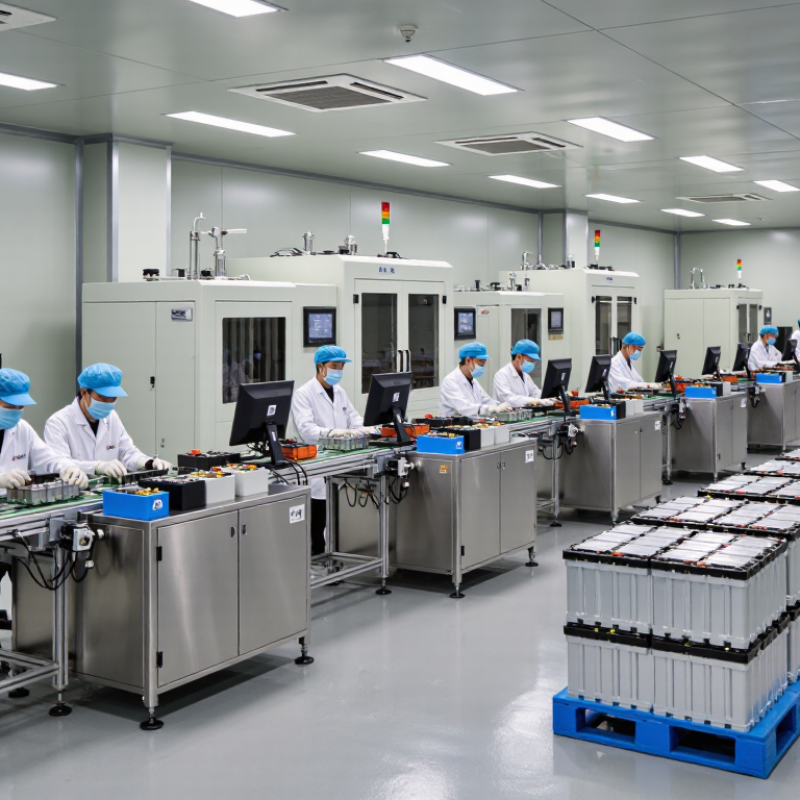
Factory visits can reveal details that brochures often miss. Look for clean workstations, barcode tracking, calibrated testing equipment, and sealed finished packs. Ask how rejected cells are handled. Ask who repairs failed units after delivery. These questions matter.

No shortlist is perfect. A low quotation may conceal weaker cells, limited support, or vague warranty conditions. I would not select a supplier from price alone. Some manufacturers communicate confidently but provide incomplete evidence. That is a warning sign. This guide compares China’s leading lifepo4 battery manufacturers through practical criteria, including technical capability, customization, compliance readiness, production consistency, and global buyer support. The goal is not to promise perfection. It is to help buyers make a clearer, more defensible decision.
China Top LiFePO4 Battery Manufacturers for Global Buyers

China’s Role in the Global LiFePO4 Battery Industry

China’s role in the global LiFePO4 battery industry reaches beyond factory scale. Its manufacturers connect cell production, pack assembly, testing, and export logistics in one ecosystem. This structure helps global buyers compare capacity, cycle life, thermal performance, and delivery schedules more efficiently. In a well-managed facility, technicians inspect electrode coating, weld busbars, and record cell voltage before final packing. Those small records matter when a battery operates in a hot warehouse or a remote solar cabinet. Still, production scale does not guarantee perfect quality. Supplier claims need practical verification.

Tips: Request recent test reports, sample packs, and traceable serial records. Check whether stated capacity matches independent discharge results. Ask about low-temperature charging limits, enclosure protection, warranty exclusions, and replacement procedures. A serious supplier should explain these details clearly, not hide behind impressive figures. Buyers should also inspect communication speed. Slow answers may become slower support after shipment.

China’s export strength also depends on engineering adaptation. A pack designed for a delivery vehicle may not suit an off-grid home system. Voltage windows, inverter compatibility, cooling space, and local certification requirements can change the selection. Experienced buyers define the use case before requesting quotations. They also compare total operating cost, not only the purchase price. Some decisions remain uncertain, especially when field data is limited. That uncertainty deserves testing, honest documentation, and a willingness to revise the specification.


Key Criteria for Evaluating Chinese Battery Manufacturers

China Top LiFePO4 Battery Manufacturers for Global Buyers

Key Criteria for Evaluating Chinese Battery Manufacturers

Choosing a Chinese LiFePO4 battery manufacturer requires more than comparing prices. A reliable supplier should explain cell grading, production controls, and quality records clearly. Ask for factory audit access, not only polished brochures. Check whether incoming cells are tested for capacity, voltage, internal resistance, and consistency. Small differences can affect pack life.

Traceability matters. Each battery pack should connect to a production batch, test record, and material source. Review documents for ISO 9001 systems and relevant safety standards, such as IEC 62619 or UN 38.3 transport testing. Requirements may vary by market, so confirm them with an independent compliance specialist. Certificates alone are not enough.

Evaluate the engineering team as carefully as the factory. Ask how the battery management system handles overcharge, overheating, imbalance, and low-temperature charging. Request sample data from cycle tests, thermal tests, and end-of-line inspections. A serious manufacturer should discuss failure rates without avoiding difficult questions. That transparency is valuable.

Communication also reveals operational maturity. Can the supplier provide stable drawings, firmware records, packaging details, and clear warranty terms? Check production capacity against your expected order volume. A large facility may still struggle with customized projects. Smaller suppliers may offer flexibility, but their backup systems can be weaker. This is where many buyers misjudge risk. Leave room for independent inspections, repeated samples, and one uncomfortable possibility: the first approved batch may not represent long-term performance.

Leading China-Based LiFePO4 Battery Manufacturers and Their Strengths

China-based LiFePO4 battery manufacturers benefit from a highly integrated industrial base. The IEA’s Global EV Outlook 2024 reports that China represented over 60% of global electric car sales in 2023. It also notes that China produced more than 95% of global LFP batteries. This concentration supports faster material sourcing, shorter production cycles, and competitive pricing for overseas buyers.

Manufacturers commonly offer prismatic cells, modular battery packs, and integrated battery energy storage systems. Their strengths include automated welding, traceable cell testing, and flexible enclosure design. BloombergNEF reported an average lithium-ion pack price of 139 US dollars per kWh in 2023, down 14% year on year. That figure explains the cost advantage, but not every quotation reflects equal quality. Buyers should review cycle-life testing, thermal performance, capacity tolerance, and warranty exclusions.

Practical verification matters. Request production samples, third-party test records, UN 38.3 documentation, and factory quality procedures. Ask how the supplier handles cell grading and replacement modules. The IEA’s Batteries and Secure Energy Transitions report recorded nearly 42 gigawatts of new battery storage capacity in 2023, showing stronger demand for dependable systems. Yet some datasheets still present optimistic cycle figures under gentle laboratory conditions. That weakness deserves attention. A realistic assessment should compare operating temperature, discharge depth, charging speed, and after-sales response before approving large-volume procurement.

Manufacturing Standards, Certifications, and Quality Control

China’s leading LiFePO4 battery manufacturers usually build quality systems around recognized international standards. ISO 9001 supports controlled production and documented processes. IEC 62619 applies to many industrial lithium battery applications. UN 38.3 testing is important for transport safety. Certifications must match the exact cell, battery pack, and factory location. Buyers should check certificate scope, issuing laboratory, and expiration date.

Reliable factories inspect incoming cells for voltage, capacity, dimensions, and internal resistance. Production teams then match cells within strict electrical ranges. During assembly, workers verify weld strength, insulation, busbar torque, and BMS communication. Some lines use barcode tracking for every cell and module. End-of-line tests may include charging, discharging, protection response, and insulation resistance. A sample pack should also receive thermal and cycle testing under controlled conditions.

Quality control is not only paperwork. Ask for inspection records, calibration reports, and corrective-action examples. A supplier that explains one failed batch honestly may be more dependable than one showing perfect charts. No factory is flawless. Small process gaps can still appear during seasonal demand or material changes. Buyers should request independent testing when the project is large or safety-critical. Clear technical specifications, traceable records, and repeatable inspection methods provide stronger evidence than marketing claims.

China Top LiFePO4 Battery Manufacturers for Global Buyers - Manufacturing Standards, Certifications, and Quality Control

Evaluation Area Relevant Standard or Requirement What It Covers Evidence Global Buyers Should Request Buyer Verification Focus
Cell and Battery Safety IEC 62619 Safety requirements and tests for secondary lithium cells and batteries used in industrial applications, including stationary energy storage. A valid test report or certificate identifying the exact cell, battery model, configuration, and certification holder. Confirm that the tested model, chemistry, capacity, enclosure, and battery-management system match the supplied product.
Stationary Energy Storage Safety UL 1973 Safety requirements for batteries used in stationary applications, light electric rail, and auxiliary power systems. Certificate or evaluation report from an accepted certification body, with the applicable product listing and conditions of use. Check the certification scope, maximum voltage, installation conditions, thermal controls, and permitted system configuration.
System-Level Fire Testing UL 9540A A test method for evaluating thermal runaway and fire propagation characteristics of battery energy storage systems. A complete test report covering the relevant cell, module, unit, or installation level. Verify that the report applies to the actual system architecture, enclosure, module spacing, cooling method, and software controls.
Transportation Compliance UN 38.3 Transport tests for lithium cells and batteries, including altitude simulation, thermal cycling, vibration, shock, external short circuit, impact or crush where applicable, overcharge, and forced discharge. UN 38.3 test summary and shipping documentation for the exact battery type. Confirm that the battery classification, watt-hour rating, packaging instructions, and test summary correspond to the shipment.
China Market Safety GB/T 36276 Technical requirements and test methods for lithium-ion batteries used in electrical energy storage systems in China. Test documentation issued by a competent laboratory, including the tested battery architecture and operating limits. Review test conditions, cell chemistry, rated energy, protection functions, environmental range, and revision status of the report.
Quality Management ISO 9001 Requirements for a quality-management system covering processes such as design, purchasing, production, inspection, corrective action, and customer support. Current certificate showing the manufacturing site, scope, certificate number, issue date, and expiry date. Check whether the certificate covers the actual production facility rather than only a sales or administrative office.
Environmental Management ISO 14001 Environmental-management processes for identifying impacts, managing compliance obligations, and improving environmental performance. Current site-specific certificate and environmental-management scope. Ask for evidence covering hazardous-material handling, waste management, emergency response, and applicable local permits.
Automotive Applications IATF 16949 Automotive quality-management requirements emphasizing risk control, traceability, defect prevention, and supply-chain consistency. Valid certificate covering the relevant automotive production site and scope. Confirm applicability to the intended automotive product line; certification should not be assumed for non-automotive battery products.
Incoming Material Control Supplier quality and incoming inspection procedures Verification of cells, busbars, connectors, insulation materials, enclosures, electronic components, and other critical parts before production. Incoming inspection plans, supplier approval records, sampling rules, and nonconformance procedures. Look for cell grading, barcode scanning, dimensional checks, voltage and internal-resistance measurements, and quarantine controls.
Production Process Control Documented work instructions and process-control plans Control of welding, assembly, insulation, torque, sealing, software loading, labeling, and end-of-line testing. Process flow charts, control plans, equipment calibration records, and operator training records. Confirm that critical parameters have defined limits, automatic alarms, approval rules, and retained production records.
Battery Management System BMS functional and protection testing Monitoring and protection for overcharge, over-discharge, overcurrent, short circuit, overtemperature, undertemperature, cell imbalance, and communication faults. BMS specifications, protection-threshold records, firmware-control procedures, and fault-injection test results. Check alarm and cutoff values, response times, balancing strategy, data logging, password control, and firmware revision management.
Electrical Performance Capacity, energy, power, and efficiency testing Verification of rated capacity, usable energy, charge and discharge limits, continuous and peak current, round-trip efficiency, and self-discharge. Production test reports, approved test methods, calibrated equipment records, and sample-based capacity results. Ensure test temperature, charge protocol, discharge rate, cutoff voltage, rest periods, and acceptance criteria are clearly defined.
Thermal and Environmental Reliability Temperature, humidity, vibration, shock, and ingress testing as applicable Performance and safety under the environmental conditions expected during transport, installation, and operation. Environmental test plans and reports specifying temperature range, humidity, vibration profile, shock level, and enclosure rating where applicable. Match the tested conditions to the project site and verify that the enclosure rating is certified for the complete assembled product.
Traceability and After-Sales Control Lot traceability, warranty, and corrective-action systems Ability to trace cells and critical components to production batches, investigate failures, manage recalls, and support warranty claims. Serial-number structure, batch records, warranty terms, failure-analysis reports, and corrective-action procedure. Verify retention periods, response times, spare-parts policy, remote-support capability, and the definition of a warranty performance claim.

Important: Standards and certifications apply only within their stated scope. Buyers should verify the certificate holder, manufacturing site, product model, test configuration, issuing body, validity period, and applicable destination-market requirements before placing an order.

How Global Buyers Can Select and Purchase from China Suppliers

China’s LiFePO4 battery market offers broad capacity, pricing, and customization choices. Global buyers need more than a factory quotation. The International Energy Agency reported that global battery demand exceeded 750 GWh in 2023. LiFePO4 batteries represented nearly 40% of the electric vehicle battery market. Demand is growing, but supplier quality still varies.

Request traceable records before placing a large order. Check cell origin, production dates, capacity test results, and battery management system settings. Ask for an independent report covering UN 38.3, IEC 62619, or other required standards. Certificates must match the exact model, not a similar product. Small samples matter. Test capacity, voltage consistency, temperature rise, and communication functions under real loads.

BNEF’s 2024 Battery Price Survey reported an average lithium-ion pack price of 115 dollars per kWh, a 20% annual decline. A low quote can still hide weaker cells, limited warranty support, or expensive shipping. Compare total landed cost, including inspection, packaging, duties, insurance, and replacement terms. Use clear purchase contracts with acceptance criteria and staged payments. I would not trust impressive cycle-life claims without test conditions. That is where buyers often overestimate savings. Supplier audits, video inspections, and third-party testing reduce uncertainty, although they cannot remove it completely.

China Top LiFePO4 Battery Manufacturers for Global Buyers

Typical LiFePO4 battery packs use 3.2 V nominal cells connected in series. The values below show common pack configurations that global buyers may encounter when comparing Chinese suppliers. Buyers should confirm the nominal voltage, operating voltage range, cell count, capacity, certifications, warranty, and testing documents before purchase.