What is a Switching Power Supply and How Does It Work?
In the world of electronics, the concept of a Switching Power Supply is crucial. Experts like Dr. Emily Carter highlight its importance, stating, "Switching Power Supplies are the backbone of modern electronics." These devices efficiently convert electrical energy, providing stable power for various applications.
Switching Power Supplies operate by rapidly switching on and off, making them highly efficient. They are used in everything, from laptops to industrial machines. The process involves complex circuit design and smart control methods. While powerful, they may also introduce noise and require careful design.
Understanding how a Switching Power Supply works is vital for engineers. There are challenges in managing heat and preventing interference. The balance between efficiency and reliability can be difficult to achieve. Conflicts may arise when adjusting for size and performance. Recognizing these complexities can guide improvements in this essential technology.
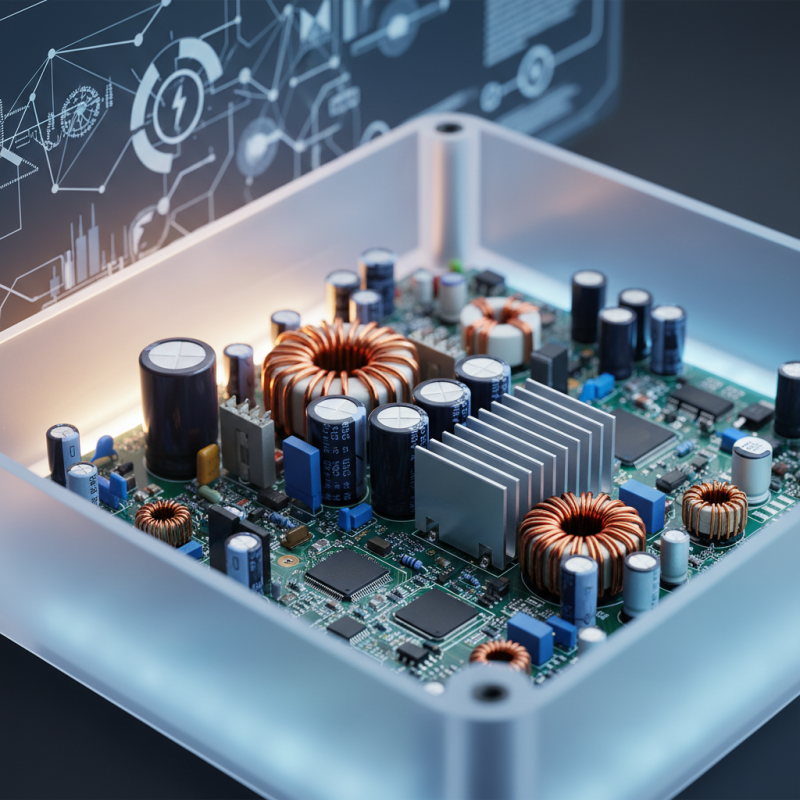
What is a Switching Power Supply?
A switching power supply (SPS) is an essential device in modern electronics. It converts electrical power efficiently, unlike traditional linear power supplies. These systems are compact and lightweight, making them ideal for many applications. Reports show that SPS technology accounts for over 80% of the power supply market. It's commonly found in computers, televisions, and other consumer electronics.
How does a switching power supply work? It regulates voltage by rapidly switching on and off, creating pulses that are transformed into stable output voltages. This high-frequency operation reduces energy loss, contributing to overall efficiency. Some studies indicate that SPS can achieve efficiencies over 90%. However, noise can be an issue. This noise may interfere with sensitive electronic components.
Despite their advantages, switching power supplies are not without flaws. Design complexity can lead to reliability issues. Additionally, thermal management is crucial since these devices can generate excess heat. Engineers must balance performance and durability in their designs. The demand for SPS continues to grow, fueled by the rise of renewable energy sources and electric vehicles. Yet, challenges remain in reducing electromagnetic interference and enhancing resilience in harsher environments.
The Basic Components of a Switching Power Supply
A switching power supply is an essential component in many electronic devices. It converts electrical energy efficiently. Understanding its basic components is crucial for grasping how it works.
The heart of a switching power supply is the transformer. It changes voltage levels while minimizing energy loss. This device often has multiple windings, allowing for various output voltages. Next, the input stage cleans up the incoming power. Filters and rectifiers smooth the AC signal, turning it into DC. Without this process, the current would be erratic.
Another significant part is the switching element, often a transistor. This device opens and closes at very high speeds. It controls power flow to the transformer. It might seem simple, but it requires precision. The feedback loop stabilizes output voltage. If not properly designed, it can lead to fluctuations. Power supplies rely on these interconnected elements to function correctly. Missing just one can result in failure.
Switching Power Supply Efficiency Comparison
How Switching Power Supplies Convert Voltage
Switching power supplies are crucial in modern electronics. They efficiently convert high-voltage AC to low-voltage DC. The process starts with an incoming AC voltage. This voltage is then rectified and filtered, turning it into a smoother DC output.
Next, the DC voltage is switched on and off rapidly by a transistor. This pulse-width modulation creates a varying voltage. A transformer then steps down this voltage to the desired level. During this step, energy is exchanged, allowing for effective voltage conversion.
However, designing these systems can be challenging. Various factors, like electromagnetic interference and heat dissipation, often complicate the process. Moreover, achieving optimal efficiency requires careful engineering. There is often a balance between size, weight, and performance that needs consideration. Understanding these nuances can lead to better designs.
Benefits of Using Switching Power Supplies
Switching power supplies offer numerous advantages in various applications. They are highly efficient, often exceeding 90%. This means less energy is wasted as heat. With their compact design, they save space within devices. Reducing footprint is essential for modern electronics.
Durability is another key benefit. Switching power supplies tend to have a longer lifespan. This reliability translates to fewer replacements and lower long-term costs. They adjust easily to different loads, maintaining stable output. This flexibility is crucial for dynamic power needs.
Tips: When selecting a power supply, consider the wattage requirements carefully. Underestimating this can lead to failures. Also, check for thermal management features. Overheating can significantly reduce efficiency and lifespan. Lastly, always review compatibility with your equipment. Mismatched voltages may cause unexpected issues, and that's something to reflect on.
Common Applications of Switching Power Supplies
Switching power supplies (SPS) have become indispensable in various industries. They are widely used in consumer electronics, automotive applications, and industrial machinery. A report by the International Energy Agency indicates that switching power supplies account for nearly 80% of power electronics in the market. This highlights their crucial role in modern technology.
In consumer electronics, SPS is commonly found in laptops and smartphones. They convert higher voltages to lower levels efficiently, aiding battery life. According to a study by the U.S. Department of Energy, SPS can improve energy efficiency by up to 90%. This efficiency is significant when powering devices that require constant voltage, like LED lighting systems.
The automotive sector also relies on SPS for advanced driver-assistance systems (ADAS). These systems enhance vehicle safety and performance. A recent report suggested that the market for SPS in automotive applications is projected to grow by 11% annually. This reflects the increasing demand for energy-efficient solutions. However, manufacturing SPS can pose challenges. The process requires precise design to mitigate electromagnetic interference. Such complexities might lead to inefficiencies that warrant further exploration and optimization in design.

 2 Enterprise Lane, Bedford, PA 15522
  (800) 771-7139
  sales@site_040a9139-525b-4487-aedd-8b22114146ed