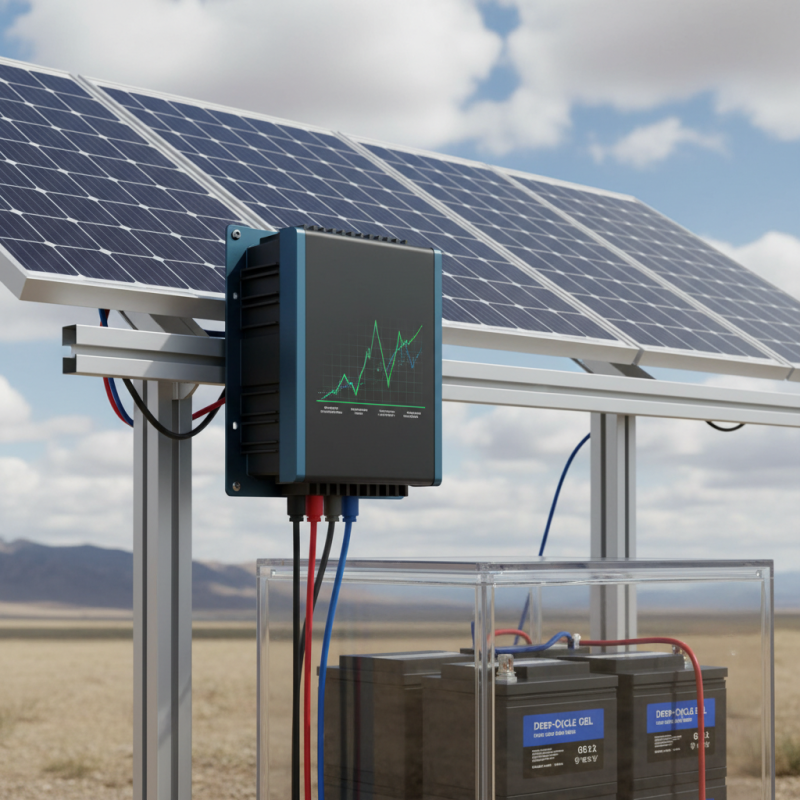
What is a Solar MPPT controller and how does it work?
A Solar MPPT controller is an essential device in solar energy systems. It optimizes the power output from solar panels, ensuring maximum efficiency. This technology tracks the maximum power point, allowing systems to adjust to varying conditions.
Solar panels produce different amounts of energy depending on sunlight. Without proper regulation, this energy can be lost. The Solar MPPT controller helps capture this energy effectively. It converts excess voltage into additional current, enhancing the system's overall performance.
Understanding this technology is crucial for anyone interested in solar energy. While it is effective, users often overlook its importance. Many assume solar panels alone are enough. However, without a Solar MPPT controller, one may not fully realize the potential of their solar setup. Reflecting on this, it's clear that every solar installation needs efficient management for success.
What is a Solar MPPT Controller?
A solar MPPT (Maximum Power Point Tracking) controller is an important element in solar power systems. This device optimizes the energy output from solar panels. It continuously monitors the voltage and current generated. By adjusting the load, it ensures maximum efficiency. As per industry reports, MPPT controllers can increase energy harvest by 20% to 30% compared to traditional controllers.
The operation of an MPPT controller involves complex algorithms. These algorithms calculate the optimal operating point to maximize energy extraction. When sunlight conditions change, the controller tweaks its settings. It can quickly adapt to shadowing or fluctuating weather conditions. Research shows that solar installations equipped with MPPT technology often produce more energy over time. Yet, this technology is not without its challenges. Installation costs can be higher, which might deter some users.
Additionally, in some conditions, MPPT performance may drop. This can occur during low-light situations. Users must be cautious about this factor. Proper installation and regular maintenance are critical. If mismanaged, the potential energy gains can diminish. So, while MPPT controllers offer substantial benefits, understanding their limitations is crucial.
What is a Solar MPPT Controller and How Does It Work?
| Parameter | Description |
| Definition | A solar MPPT (Maximum Power Point Tracking) controller optimizes the power output from solar panels by adjusting the electrical load to maximize energy capture. |
| Functionality | It continuously monitors the voltage and current from the solar panels and adjusts the load to keep the panels operating at their maximum power point. |
| Efficiency | MPPT controllers can increase the efficiency of solar systems by up to 30% compared to traditional controllers, especially in variable weather conditions. |
| Components | Typically includes a microcontroller, MOSFETs for switching, and sensors for voltage and current reading. |
| Applications | Used in various systems like residential solar power systems, large scale solar farms, and off-grid solar installations. |
| Advantages | Maximizes energy harvest, increases battery lifespan, adapts to environmental changes, and enhances overall system performance. |
| Limitations | Can be more expensive than standard controllers and may require more complex installation and configuration. |
Key Components of Solar MPPT Controllers
Solar Maximum Power Point Tracking (MPPT) controllers optimize energy harvest from solar panels. These controllers can significantly boost efficiency, achieving up to 30% more power compared to traditional systems. They adjust the electrical operating point of solar panels, ensuring maximum energy capture throughout the day.
Key components of solar MPPT controllers include the DC-DC converter, microcontroller, and sensors. The DC-DC converter changes voltage and current to match the needs of the load. The microcontroller constantly monitors the output and adjusts settings accordingly. Sensors track environmental conditions, like temperature and solar irradiance. This synergy allows for real-time adjustments, enhancing performance in varying weather conditions, according to a report by the International Renewable Energy Agency.
However, challenges exist. Not all MPPT controllers are created equal. Some may not respond quickly enough to changing light conditions. This lag can reduce overall efficiency. Industry reports indicate that optimal settings require regular adjustments and maintenance. Ensuring these components function correctly is vital for sustained performance. This reality suggests a more thoughtful approach is needed to fully benefit from solar technology.
How MPPT Technology Optimizes Solar Energy Harvesting
MPPT, or Maximum Power Point Tracking, technology significantly enhances solar energy harvesting. It optimizes the output from solar panels by adjusting the electrical operating point. Research from the National Renewable Energy Laboratory indicates that MPPT can boost energy captured by 15-20%. This is crucial in maximizing the return on investment for solar installations.
Solar panels perform best at specific conditions. Temperature, sunlight intensity, and shading can all affect performance. MPPT controllers adapt to these variations, ensuring consistent energy production. A report from the International Energy Agency shows that devices employing MPPT experience up to 30% higher efficiency in non-ideal conditions. These numbers highlight the technology’s importance in real-world applications, where conditions often change unexpectedly.
However, there are challenges. Not all MPPT controllers operate seamlessly. Some may struggle under rapid fluctuations in sunlight or with certain panel types. Users report inconsistencies in performance. Regular monitoring is essential to ensure that the system operates at peak efficiency. Without proper maintenance, the energy gains can diminish over time. Evaluating the specific needs of a solar setup helps in choosing the right controller for effective energy harvesting.
Performance Metrics: Efficiency Ratings of MPPT Controllers
Solar MPPT (Maximum Power Point Tracking) controllers are essential for optimizing energy harvest from solar panels. Their efficiency directly impacts overall system performance. Reports indicate that well-designed MPPT controllers can achieve efficiencies over 95%. This means they successfully convert and utilize the maximum power generated from solar arrays.
The performance metrics of these controllers are crucial in understanding their role. According to industry data, tracking performance may vary based on environmental conditions. Key factors include temperature fluctuations and solar irradiation. Some MPPT controllers may not perform optimally in partial shading scenarios. This inefficiency can lead to significant energy losses, emphasizing the need for careful selection and placement of these controllers.
Moreover, the comparison between different MPPT technologies reveals that some may struggle under specific conditions. For instance, certain algorithms used for tracking can result in less than optimal performance. It's vital for system designers to consider these nuances. Inconsistent efficiency ratings highlight the importance of rigorous testing and proper application in real-world situations.
Applications and Benefits of MPPT Controllers in Solar Systems
The MPPT controller, or Maximum Power Point Tracking controller, plays a crucial role in solar power systems. This technology optimizes the energy harvest from solar panels. It consistently adjusts the electrical operating point to maximize energy production. Studies show that MPPT can increase energy efficiency by up to 30%. This is substantial, especially in areas with variable sunlight conditions.
MPPT controllers find applications in various settings. They are widely used in residential solar installations and commercial solar farms. Their adaptability allows them to work efficiently even in partial shading conditions. According to the National Renewable Energy Laboratory, using an MPPT controller can significantly enhance the overall system performance. This leads to better return on investment for solar projects.
**Tip:** Regularly check MPPT settings to ensure your system performs optimally.
Efficiency has its challenges. In some cases, improper installation can reduce expected benefits. It's vital to consider the specific needs of your solar setup. Monitoring performance can help address inconsistencies. Identifying underperformance early can lead to better solutions.
**Tip:** Consider using additional sensors to track solar panel performance accurately.

 2 Enterprise Lane, Bedford, PA 15522
  (800) 771-7139
  sales@site_040a9139-525b-4487-aedd-8b22114146ed