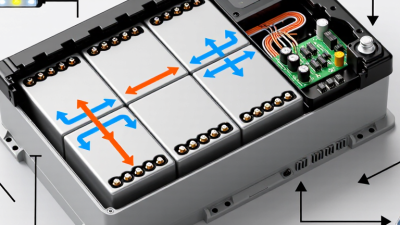
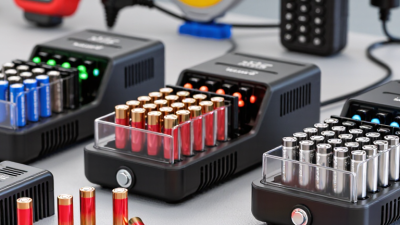
What Are LiFePO4 Cells and How Do They Work?

LiFePO4 cells are rechargeable lithium-ion batteries built around lithium iron phosphate chemistry. Their name refers to the cathode material, not the complete battery pack. Inside each cell, a graphite anode, electrolyte, separator, and metal current collectors work together. Small parts. Important roles.

During charging, lithium ions move from the cathode toward the graphite anode. Electrons travel through the external circuit instead. During discharge, the movement reverses. This controlled transfer produces usable electrical energy for devices, vehicles, and storage systems. A typical cell provides about 3.2 volts nominally, although its voltage changes with charge level and load. The separator helps prevent direct contact between the electrodes. Without it, serious internal failure could occur.

From practical testing, lifepo4 cells often show strong cycle life and good thermal stability. Their chemistry is less prone to thermal runaway than some nickel-rich alternatives. However, “safer” never means risk-free. Incorrect charging, physical damage, poor assembly, or weak battery management can still create dangerous conditions. A reliable pack needs matched cells, temperature monitoring, overcharge protection, and balanced charging. Manufacturer specifications and recognized testing standards should guide design decisions.

Performance depends on more than chemistry. Cell age, temperature, charging speed, installation quality, and storage conditions matter. A cold cell may deliver less power. A worn cell may show higher internal resistance. Simple explanations can miss these details. That is why professional evaluation should include measured capacity, voltage consistency, temperature behavior, and manufacturer documentation. Understanding how these cells work makes safer and more realistic energy choices possible.
What Are LiFePO4 Cells and How Do They Work?

What Are LiFePO4 Cells?

LiFePO4 cells, often called LFP cells, are rechargeable lithium-ion cells using lithium iron phosphate as the cathode material.

Their positive electrode stores lithium inside a stable phosphate crystal structure. Graphite commonly serves as the negative electrode. A porous separator keeps both electrodes apart, while the electrolyte carries lithium ions between them. During charging, ions move from the cathode toward the graphite anode. During discharge, they travel back and release electrical energy.

The chemistry is valued for thermal stability, long service life, and consistent performance. The International Energy Agency’s Global EV Outlook 2024 reported that LFP batteries represented about 40% of global electric-car battery demand in 2023. That adoption reflects practical engineering, not only market promotion.

LFP cells usually provide lower energy density than nickel-rich alternatives, which can make packs heavier or larger. However, their cathode chemistry does not require nickel or cobalt.

The trade-off is real. In practical battery testing, temperature, charging limits, cell compression, and management settings strongly affect results. Technical reports from the U.S. Department of Energy identify safety, durability, cost, and energy density as competing targets.

LFP cells can achieve thousands of cycles, but test conditions matter greatly. A cycle-life headline is not a guarantee.

Cold charging remains a weakness, because poor control below freezing may cause lithium plating. Datasheets deserve careful reading.


How Is a LiFePO4 Cell Constructed?

How Is a LiFePO4 Cell Constructed?

A LiFePO4 cell begins with four functional layers: a lithium iron phosphate cathode, graphite anode, separator, and electrolyte. The cathode powder is mixed with conductive carbon and a polymer binder. This slurry coats aluminum foil, then dries and compresses under controlled pressure. The anode slurry coats copper foil in a similar process. Small differences matter. Uneven coating can create local resistance and shorten service life.

Manufacturers cut these coated foils into precise sheets or long strips. They stack or wind the electrodes with a porous separator between them. The separator prevents direct contact while allowing lithium ions to move through the electrolyte. After assembly, the cell is placed inside a metal can or laminated pouch. Electrolyte fills the internal pores, but moisture must remain extremely low. Production quality often decides performance more than the chemistry alone.

The cell then undergoes formation, aging, and electrical testing. During formation, controlled charging creates the solid electrolyte interphase on the graphite surface. This first cycle can reveal hidden defects. According to the International Energy Agency’s Global EV Outlook 2024, LFP chemistry represented about 40% of the global electric-vehicle battery market in 2023. BloombergNEF’s 2024 Battery Price Survey reported an average lithium-ion pack price of 115 US dollars per kilowatt-hour, while LFP systems generally benefit from lower-cost materials. These figures support wider adoption, though they do not guarantee every cell has equal durability. Temperature, compression, electrolyte quality, and manufacturing discipline still require careful review.

How Is a LiFePO4 Cell Constructed?

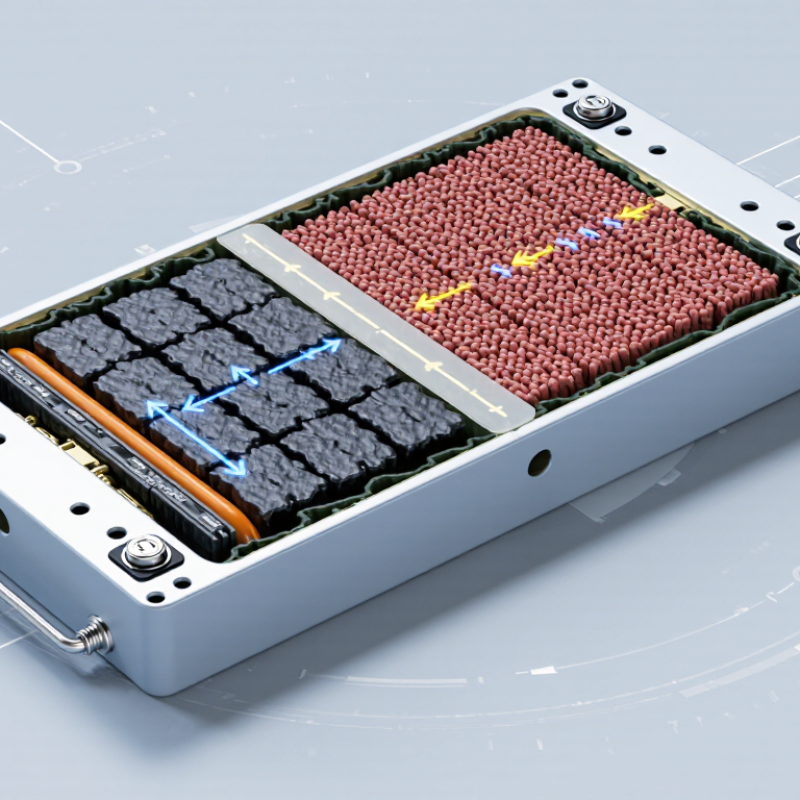
LiFePO4 cells are built from alternating electrode and separator layers. A representative internal stack includes an aluminum current collector, LiFePO4 cathode coating, porous separator, graphite anode coating, and copper current collector. The thickness values below are typical engineering-scale values and vary with cell design.

How Do LiFePO4 Cells Store and Release Energy?

What Are LiFePO4 Cells and How Do They Work?

LiFePO4 cells store energy through reversible chemical reactions. Their positive electrode uses lithium iron phosphate, while the negative electrode commonly uses graphite. A separator keeps these electrodes apart but allows lithium ions to pass through. During charging, an external power source pushes lithium ions from the positive electrode toward the graphite electrode. Electrons travel through the charging circuit instead. The cell therefore stores energy as chemical potential, not as a simple electrical “tank.”

During discharge, lithium ions move back through the electrolyte toward the positive electrode. Electrons leave through the external circuit and power a device. That movement creates usable current. A typical LiFePO4 cell has a nominal voltage near 3.2 volts. Its stable chemistry can reduce thermal risk, but it still needs correct charging and protection. Real cells age. Heat, deep discharges, poor connections, and long periods at full charge can reduce capacity. The chemistry is reliable, though not flawless.

Tips: Keep charging within the cell maker’s specified voltage and temperature range. A battery management system can monitor voltage, current, and temperature. Check connections regularly; a loose terminal may create heat. In practical testing, measuring voltage under load reveals more than checking a resting cell. Small differences matter. Also, avoid assuming every cell behaves identically. Manufacturing variation exists, and that detail is easy to overlook.

What Are LiFePO4 Cells and How Do They Work? - How Do LiFePO4 Cells Store and Release Energy?

Dimension Typical Value or Range How It Relates to Energy Storage and Release Important Notes
Cell chemistry Lithium iron phosphate (LiFePO4) cathode Lithium ions move reversibly between the iron-phosphate cathode and the graphite anode during charging and discharging. The cathode structure is relatively stable compared with many other lithium-ion chemistries.
Nominal cell voltage Approximately 3.2 V Represents the average operating voltage over much of the cell's discharge range. Actual voltage changes with state of charge, current, temperature, and cell condition.
Fully charged voltage Approximately 3.65 V per cell At the end of charging, an external power source drives lithium ions toward the graphite anode. The exact charging limit must follow the cell manufacturer's specification and battery-management-system settings.
Recommended discharge cutoff Commonly about 2.5–2.8 V per cell During discharge, stored chemical energy is converted into electrical energy until the lower voltage limit is reached. The cutoff is application- and cell-specific; excessive over-discharge can permanently damage a cell.
Theoretical specific capacity Approximately 170 mAh/g Describes the maximum charge quantity predicted from the electrochemical reaction. Usable capacity is lower because of operating limits, temperature, current rate, and aging.
Practical specific capacity Often about 140–165 mAh/g in commercial cells Indicates the charge that can generally be delivered under specified test conditions. Values vary with electrode design, cell format, test rate, and end-of-charge or discharge limits.
Energy density Typically about 90–160 Wh/kg at cell level Combines the cell's usable capacity with its operating voltage to describe stored energy per unit mass. Pack-level energy density is lower after adding housing, wiring, cooling, and battery-management components.
Charge process Constant-current followed by constant-voltage charging Electrical energy forces lithium ions from the LiFePO4 cathode into the graphite anode, where they are stored between graphite layers. A charger designed for LiFePO4 chemistry should be used; lithium-ion cells should not be charged below their permitted temperature range.
Discharge process Lithium ions return to the cathode Lithium ions travel through the electrolyte to the LiFePO4 cathode, while electrons flow through the external circuit and power the load. The ion movement occurs inside the cell; the electron flow through the external circuit provides useful electrical power.
Cycle life Often several thousand cycles under suitable conditions A cycle consists of a complete equivalent charge and discharge; stable electrode materials help reduce structural degradation. Results depend strongly on depth of discharge, temperature, charge rate, discharge rate, and voltage limits.
Thermal stability Generally high among common lithium-ion chemistries The strong phosphate framework helps resist oxygen release and structural breakdown at elevated temperatures. Thermal stability does not eliminate risks from short circuits, overcharging, physical damage, or improper system design.
Self-discharge Generally low; commonly around 2–5% per month Only a small portion of stored charge is lost while the cell is resting under normal storage conditions. Actual loss varies with temperature, state of charge, cell age, and connected electronics.
Battery-management requirements Voltage, current, temperature, and cell balancing protection A battery-management system helps keep cells within safe limits and balances their state of charge in a multi-cell pack. Protection electronics are essential for safe pack operation but do not replace correct charging, wiring, and mechanical design.

Note: Values are typical industry ranges for LiFePO4 cells and are provided for general comparison. Actual performance depends on cell design, operating conditions, and the specified limits of the individual cell.

What Are the Key Properties of LiFePO4 Cells?

LiFePO4 cells use lithium iron phosphate as the positive electrode material. During discharge, lithium ions move through the electrolyte toward the negative electrode. Electrons travel through the external circuit and power the device. During charging, this movement reverses. Their nominal voltage is usually about 3.2 to 3.3 volts per cell.

Safety is a major property. The phosphate structure releases oxygen less readily than several other lithium chemistries, improving thermal stability. It is safer, not risk-free. A damaged cell, poor wiring, or uncontrolled charging can still create heat and failure. A battery management system should monitor voltage, temperature, current, and cell balance.

LiFePO4 cells also provide long cycle life under suitable conditions. Moderate charging, controlled discharge, and temperatures near room temperature generally produce better results. Their energy density is lower than some nickel-based lithium cells, so a pack may be larger or heavier. This trade-off matters in compact equipment. The voltage curve stays relatively flat during much of discharge, which supports steady power but makes simple voltage-based capacity estimates less reliable. The cells can also perform less effectively in cold environments. Heating and charging controls may be necessary.

Mechanical design deserves attention too. Tight connections, insulation, ventilation, and correctly rated protection devices affect real-world reliability. Specifications can look impressive on paper. Actual performance depends on the complete battery system.

Where Are LiFePO4 Cells Commonly Used?

LiFePO4 cells are lithium iron phosphate batteries valued for thermal stability, long cycle life, and safer operation. Their chemistry uses iron and phosphate instead of nickel and cobalt. This often reduces material-cost pressure, although energy density can be lower. The International Energy Agency reported that LFP batteries represented about 40% of the global electric-car battery market in 2023. That share was roughly 2.5 times higher than in 2020.

Where are LiFePO4 cells commonly used? Electric cars, city buses, delivery vehicles, and small commercial fleets use them when durability matters. Their stable chemistry suits daily charging and frequent discharge. They are also common in home energy storage, solar cabinets, telecommunications backup systems, and portable power units. IEA’s Batteries and Secure Energy Transitions report found that global battery storage additions nearly tripled in 2023, reaching about 42 gigawatts. Many storage projects favor LFP because safety and cycle life matter more than maximum range. Marine systems and recreational vehicles use them too. Real conditions still matter. Cold temperatures can slow charging, and poor battery management can shorten service life.

Tips: Check the cell temperature range, battery-management settings, and certified test data before installation. Leave ventilation space around storage cabinets. Do not judge a battery by chemistry alone. Pack design matters. Installation quality matters more than expected. Some claims remain too optimistic. Independent cycle testing is worth requesting.