How to Choose the Best 12v Battery Charger for Your Needs?
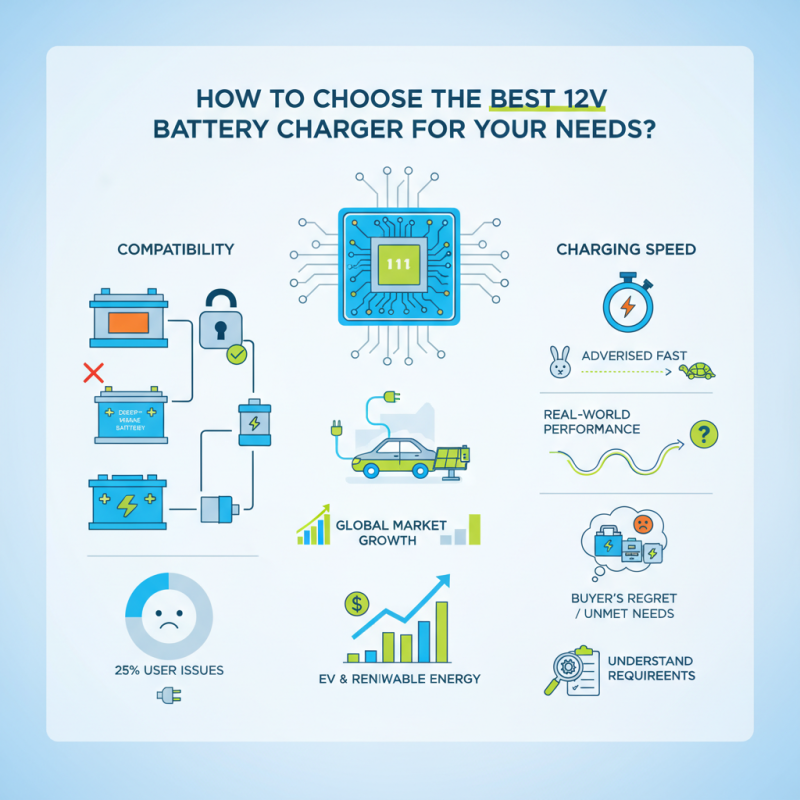
Selecting the right 12v battery charger is crucial for many users. In 2022, the global battery charger market reached a value of $12 billion and is expected to grow further. As electric vehicles and renewable energy sources gain popularity, choosing a high-quality charger has never been more important.
One key factor to consider is compatibility. Many 12v battery chargers support different battery types, but not all. Misalignment can lead to inefficiency or damage. User reviews indicate that 25% of customers experience issues from selecting incompatible chargers.
Additionally, the charging speed varies significantly among models. Some chargers may claim rapid charging, but real-world performance often falls short. It’s essential to evaluate multiple options. Research shows many buyers regret their choices after realizing their charger does not meet their specific needs. Taking the time to understand your requirements is vital.
Understanding Your Battery Type and Its Requirements
Understanding your battery type is crucial for selecting the right 12v battery charger. Different batteries, such as lead-acid, lithium-ion, and AGM, have unique charging needs. Lead-acid batteries require a gradual charge to avoid damage. They often need a bulk, absorption, and float stage. On the other hand, lithium-ion batteries charge quickly but need specific voltage thresholds. This is key to preventing overheating.
Consider the amp rating of your charger. A higher amp rating can charge your battery faster, but might not be suitable for all battery types. For instance, a 10-amp charger could be too harsh for a small lead-acid battery. However, it works well with larger batteries. It is essential to choose a charger that matches your battery's capacity.
Many people overlook the importance of battery maintenance. Regularly check your battery’s condition. Corrosion and improper fluid levels can affect performance. It's easy to forget these details, but they are vital. A quick visual inspection can save you time and money. Remember, not all chargers are created equal; understanding your battery’s requirements makes all the difference in optimal charging.
Comparison of 12V Battery Charger Types
Evaluating Charger Features: Amperage, Voltage, and Compatibility
When choosing a 12v battery charger, you need to consider various features. Amperage is crucial. Higher amperage chargers can recharge your battery faster. However, if you choose one that's too strong, it might damage smaller batteries. Pay attention to the recommended amperage for your specific battery type. Too low won't charge it efficiently. Finding a balance is essential.
Voltage compatibility is another critical factor. A charger must match your battery’s voltage for optimal performance. Mismatched voltage can lead to inefficient charging or even battery damage. Look for chargers with adjustable voltage settings. This flexibility can make a big difference.
Lastly, think about overall compatibility with different battery types. Some chargers work with lead-acid batteries. Others may support lithium-ion. Understanding your battery's needs helps avoid unnecessary purchases. Reflect on what you may have overlooked in the past. It’s easy to get tangled in specs without looking at actual needs.
Comparing Portability and Design for Your Charging Needs
When choosing a 12v battery charger, portability and design play crucial roles. A lightweight charger is easier to transport. Look for one that fits well in your vehicle or storage space. Compact designs allow you to charge on the go, whether during camping trips or roadside emergencies.
Consider how the charger feels in your hand. A non-slip grip can make a difference in wet conditions. Look for features like LED indicators that show charging status. These small details can simplify your experience and prevent mishaps.
**Tips:** Check the weight before you buy. A heavier model might not be convenient for frequent use. If possible, test it out. Can you easily read the display?
Evaluating the overall design is vital too. Does it have protective casing? A charger that’s rugged is ideal for outdoor use. Yet, some designs may compromise portability for durability. Reflect on what is most important for your unique needs.
How to Choose the Best 12v Battery Charger for Your Needs?
| Feature |
Charger A |
Charger B |
Charger C |
| Voltage Compatibility |
12V, 24V |
12V |
12V, 6V |
| Charger Type |
Smart Charger |
Trickle Charger |
Automatic Charger |
| Portability (Weight) |
1.5 kg |
0.8 kg |
2.0 kg |
| Charging Time |
2-4 hours |
4-6 hours |
3-5 hours |
| Safety Features |
Overcharge Protection |
Reverse Polarity Protection |
Both |
| Price Range |
$50 - $70 |
$20 - $30 |
$40 - $60 |
Budgeting for Quality: Finding the Right Charger Within Your Price Range
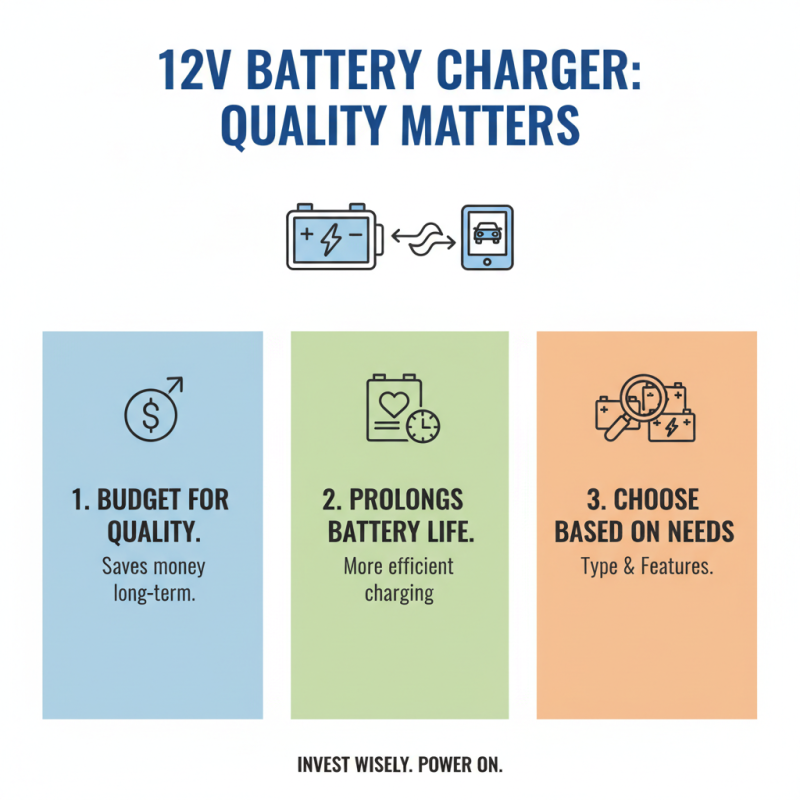
When choosing a 12v battery charger, budgeting for quality is essential. A good charger can prolong the life of your battery and save money in the long run. Set a realistic budget based on your needs. Consider the types of batteries you will be charging. Not all chargers are created equal. Some may offer features that elevate their price, but do they fit your use case?
Understanding the specs can be tricky. Chargers vary in amperage, safety features, and charging modes. Higher amperage can charge faster but may not be suitable for all batteries. Look for a charger with versatile options, yet ensure it doesn’t overspend your budget. For example, a simple manual charger might cost less. That said, it lacks the automatic shut-off feature found in pricier models.
Reflect on your actual requirements. Are you an occasional user or someone who needs to charge regularly? Sometimes, people might overspend on features they don't use. It’s okay to feel uncertain. Narrow down choices based on your budget, but don’t skimp on essential quality. A well-balanced decision can make your overall experience much better.

 2 Enterprise Lane, Bedford, PA 15522
  (800) 771-7139
  sales@site_040a9139-525b-4487-aedd-8b22114146ed