How to Choose the Right Vehicle Power Inverter for Your Needs?
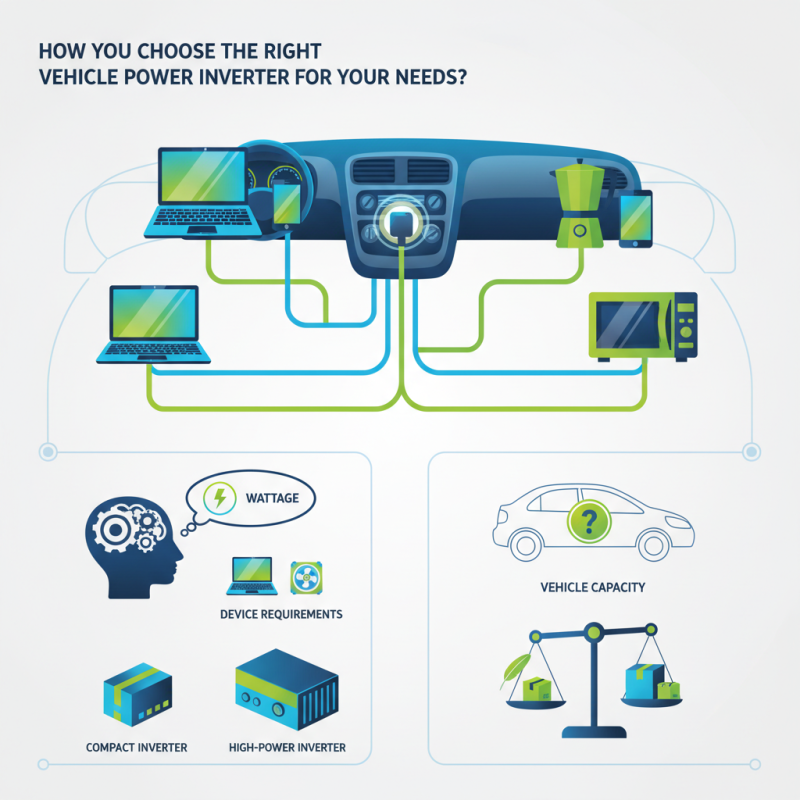
When you’re on the road, having a reliable vehicle power inverter is essential. It transforms your vehicle’s DC power into usable AC power. This device allows you to charge devices or even run small appliances. Choosing the right inverter ensures you have enough power for your needs.
Understanding the specifications of a vehicle power inverter is crucial. You need to think about your devices. Consider their wattage. A laptop requires less power than a microwave. Not knowing your requirements can lead to purchasing the wrong inverter. You may find yourself with insufficient power, which can be frustrating.
The market contains various models and features, making the choice difficult. Some options are compact and easy to carry. Others provide more power but take up more space. Think about your vehicle's capacity for extra weight and size. Reflect on what will work best for you.
Understanding Vehicle Power Inverters: A Comprehensive Overview
Understanding Vehicle Power Inverters: A Comprehensive Overview
Vehicle power inverters are essential for converting DC power from your car's battery into AC power. This allows you to run various devices, from laptops to small appliances, while on the road. Knowing the types available, like modified sine wave or pure sine wave, is crucial for choosing the right one. Each type has its strengths and weaknesses. Modified sine wave inverters are less expensive but may not work well with sensitive electronics.
When selecting an inverter, consider your power needs. Calculate the total wattage required by all devices you plan to use simultaneously. It’s easy to underestimate this. Many users have found themselves without enough power on a long trip. Choose a model that exceeds your calculated wattage for safety.
Tips: Always check the inverter's input voltage requirements. Ensure it matches your vehicle's battery. Look for features like built-in fuses or overload protection. These can prevent damage to both the inverter and your devices. Reflect on where you will use the inverter most frequently. Is it for camping or everyday travel? Your needs will guide your decision.
Power Inverter Types and Efficiency Ratings
This chart represents the efficiency ratings of different types of vehicle power inverters. Understanding these ratings can help you select the right inverter based on your energy needs and desired performance.
Types of Vehicle Power Inverters and Their Applications
When selecting a vehicle power inverter, understanding the types available is crucial. There are mainly two types: modified sine wave and pure sine wave inverters. Modified sine wave inverters are often cheaper and suitable for basic appliances. They can power lights, fans, and small chargers. However, they may not work well with sensitive electronics. This could lead to reduced performance or damage.
Pure sine wave inverters provide a smooth, consistent power supply. They are ideal for high-end electronics, like laptops and medical devices. While they come with a higher price tag, the investment often pays off. Users need to consider their specific needs and usage scenarios. It's also important to assess the inverter's wattage capacity. If it falls short, devices may not operate efficiently.
Choosing the right inverter isn't solely about price. Some users might overlook how heat dissipation affects performance. Inverters can produce heat during operation, which could lead to failures if not managed. Additionally, seeking advice online is often a double-edged sword. Various opinions can confuse rather than clarify. Consider all aspects carefully before making a decision.
Key Factors to Consider When Selecting a Power Inverter
When choosing a vehicle power inverter, several key factors must be considered. Understanding your power needs is crucial. Different devices require varying wattages. For instance, a laptop may need around 60 watts, while a small refrigerator could require 100-200 watts. According to industry reports, many consumers underestimate their needs, causing inconvenience during use.
Tip: Always calculate the total wattage of your devices. Add a buffer of 20% to ensure your inverter can handle peak loads.
Another important factor is the inverter type. Modified sine wave inverters are often more affordable, but they may not work with all electronics. Pure sine wave inverters offer cleaner power, suitable for sensitive devices. Research shows that pure sine wave models have a longer lifespan and promote efficiency. This is critical for long journeys or trips in remote areas.
Tip: Consider the environmental conditions. An inverter exposed to high heat may not perform effectively.
Portability should also be weighed. Some inverters are bulky, which can be a hassle in smaller vehicles. Choose a model that fits your space needs and is easy to store. Measuring your vehicle’s available area alongside the inverter can prevent impractical choices. Also, pay attention to safety features. Overload protection and cooling fans can prevent malfunction during operation, adding an essential layer of security.
Assessing Power Requirements for Your Specific Needs
When choosing a vehicle power inverter, it’s essential to assess your specific power requirements. Think about the devices you plan to use. For example, laptops, smartphones, and small appliances each have different power needs. Start by checking the wattage of your devices. Some may run on less than 100 watts, while others, like power tools, could require over 1,000 watts.
Consider how many devices you'll power simultaneously. This can complicate your needs. It’s important to account for the total wattage. For instance, if you want to run a laptop and a small cooler at the same time, ensure the inverter can handle that combined load. Not all inverters are created equal; some provide continuous power, while others might only peak at higher levels.
Another detail to ponder is the inverter’s efficiency. An inverter that’s not efficient can drain your vehicle’s battery quickly. Watch for those devices that don’t clearly specify their energy consumption. You might underestimate your power needs without the right information. Reflect on how often you will use these devices while traveling. Knowing your habits and requirements will guide you toward the inverter that suits your lifestyle best.
How to Choose the Right Vehicle Power Inverter for Your Needs?
| Inverter Type | Power Rating (W) | Output Waveform | Suitable for | Battery Drain (%/hr) |
| Modified Sine Wave | 300W | Modified Sine Wave | Small electronics, lights | 10% - 15% |
| Pure Sine Wave | 600W | Pure Sine Wave | Laptops, microwaves | 15% - 20% |
| High Power Inverter | 1500W | Modified Sine Wave | Power tools, appliances | 20% - 25% |
| Backup Inverter | 1000W | Pure Sine Wave | Refrigerators, TVs | 15% - 20% |
| Mini Inverter | 200W | Modified Sine Wave | Phones, chargers | 5% - 10% |
Safety Features and Reliability in Vehicle Power Inverters
When selecting a vehicle power inverter, safety features should be a primary concern. Look for models with over-voltage protection. This feature will prevent excessive voltage from damaging your devices. Similarly, short-circuit protection can avoid dangerous situations. These elements make the inverter safer for you and your gear.
Consider the unit's reliability as well. A consistent power supply is essential, especially on long trips. Some inverters include cooling fans to prevent overheating, which can prolong the life of the device. You might find that reliable units offer warranties. Look for terms that can assure you of quality. However, many warranties are limited, and that can be a drawback.
Finally, while it's tempting to choose based solely on features, consider user reviews. They often highlight issues not mentioned. Some customers report failures even in well-rated models. Understanding these experiences can help you make a better choice. Safety and reliability must go hand-in-hand for peace of mind.

 2 Enterprise Lane, Bedford, PA 15522
  (800) 771-7139
  sales@site_040a9139-525b-4487-aedd-8b22114146ed